

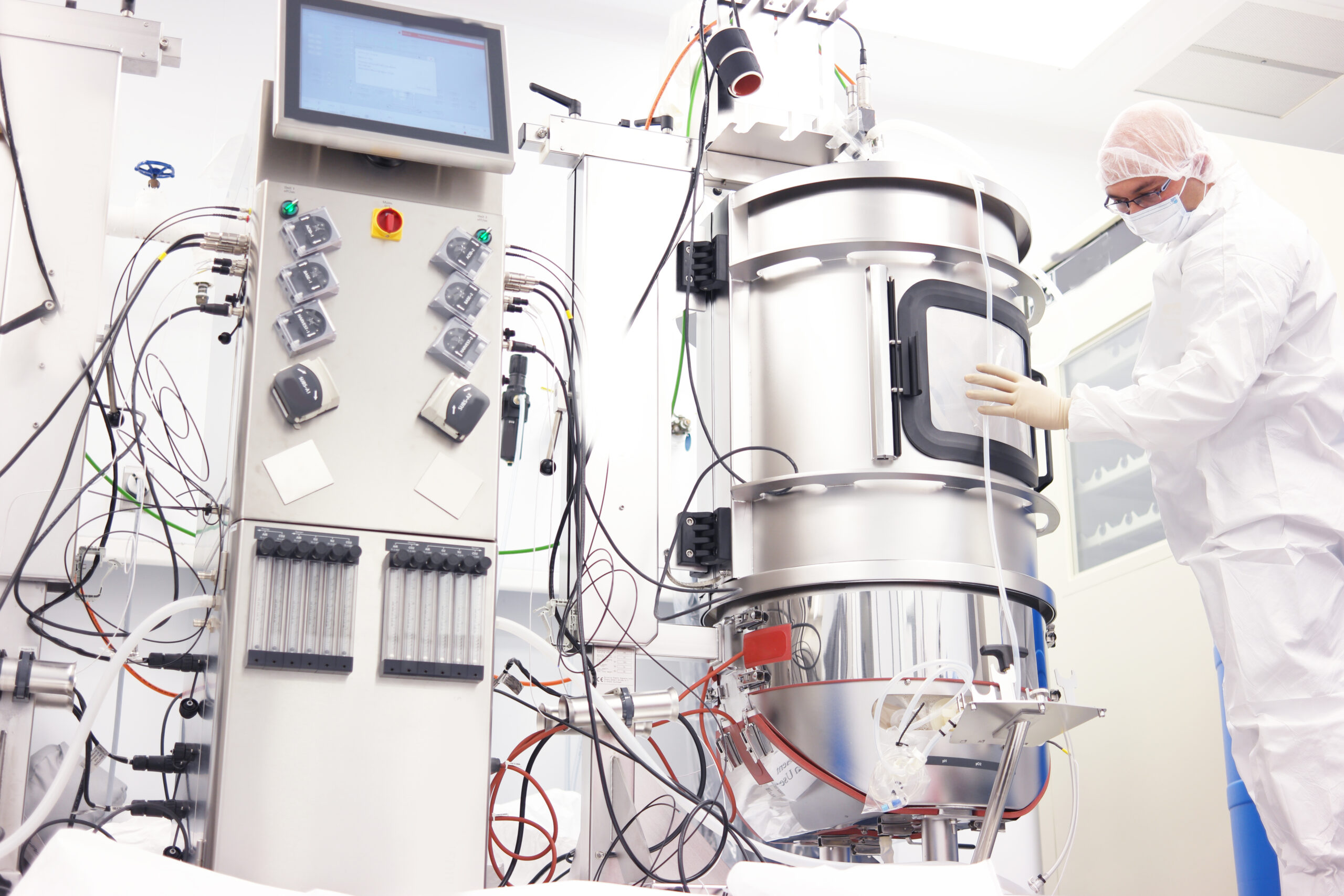
Regulators support the idea of using continuous processes to make drugs, with the caveat being that production is strictly controlled. This expectation is fueling a wave of innovation in tech that is rebounding to reshape manufacturing.
Korean researchers looked at the shifting landscape of process control in continuous manufacturing in a recent study, concluding that technological advances and regulation are the two most important dynamics.
Study co-author Moo Sun Hong, PhD, a professor from the department of chemical and biological engineering at Seoul National University, tells GEN, “Several advances have converged to make continuous biomanufacturing increasingly practical.
“On the monitoring side, process analytical technologies (PAT), including spectroscopic sensors and soft sensors, now provide much richer real-time information.
“At the same time, mechanistic models, hybrid models, and digital twins enable prediction of process behavior, optimization of operating conditions, and early detection of deviations. Together, these technologies allow manufacturers to move from reactive quality testing toward proactive, model-informed process control,” he adds.
Regulatory expectations
In addition to fueling the adoption of continuous manufacturing, technology advances are also changing what regulators want from developers.
Hong says, “Regulators have shifted from emphasizing end-product testing toward encouraging science- and risk-based process understanding throughout the product lifecycle.
“Recent guidance, including ICH Q13, places greater emphasis on validated process models, real-time monitoring, and robust control strategies that ensure consistent product quality during continuous operation,” he continues.
And, as technologies continue to advance, regulators are likely to want even more information about the models developers use during process development and to control production on the factory floor, according to Hong.
“I expect regulators will become increasingly receptive to advanced model-informed control strategies, provided there is sufficient evidence that the underlying models are reliable for their intended use.
He adds that, “As continuous manufacturing becomes more widely adopted, regulatory expectations are likely to place greater emphasis on demonstrating that process models remain accurate over time through ongoing performance monitoring and, when appropriate, model updates supported by new data.”
AI process control
Artificial intelligence (AI) is also likely to play an increasingly important role in the control of continuous biopharmaceutical manufacturing processes, according to Hong, who says it will be used in conjunction with, rather than as a replacement for, mechanistic modeling.
“In the near term, AI is likely to have the greatest impact in areas such as soft sensing, anomaly detection, process optimization, and supporting the development and maintenance of digital twins.
“Hybrid approaches that combine AI with first-principles models are particularly promising because they can improve predictive performance while retaining the interpretability and physical consistency needed for industrial deployment and regulatory acceptance,” he says.

