
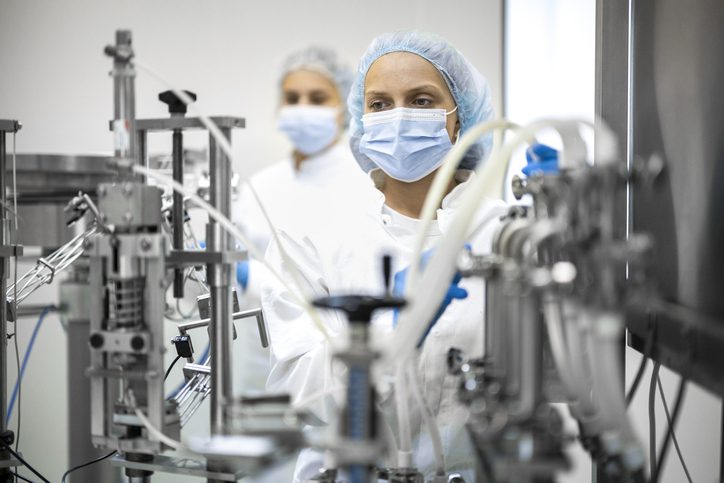
For much of the past two decades, the biopharmaceutical industry has assessed single-use technologies in terms of adoption: When would they replace stainless steel? How large could disposable bioreactors become? Which unit operations could realistically transition to single use?
At the 2026 Bio-Process Systems Alliance (BPSA) International Single-Use Summit in Boston in July, the conversation had clearly moved on to bigger things. Yes, single-use systems (SUS) bioprocessing has become mainstream. But the more interesting question today is what the industry needs next, and how SUS will enable the future.
Single-use market data presented by BioPlan Associates from the 23rd Annual Report and Survey of Biopharmaceutical Manufacturing Capacity and Production1 showed an industry continuing its return to normal after the extraordinary volatility of the pandemic. Single-use volume growth fell sharply in 2023 before rebounding strongly in 2024 and remaining positive in 2025.
At the BPSA Annual Summit, Eric Langer, managing partner, BioPlan Associates, characterized the current environment as one of “realistic optimism,” with the industry moving from post-pandemic anxiety toward more disciplined investment and decision-making.
The change is important. More than 200 SUS suppliers now participate in the segment, and disposable technologies are used across every stage of biopharmaceutical development and manufacturing. But maturity also raises expectations. As Langer noted, the honeymoon is over.
The next wave of innovation is increasingly about what can be built around and into single-use technologies: intensified and continuous processing, automation, better integration, and smarter, less expensive manufacturing.
![Fig 1. Change in Sales VOLUME of SUS Manufacturers, 2023-2026: A Return Toward Normal [BioPlan Associates, Research Data Single Use Bioprocessing Industry Growth Trends, July 2026]](https://www.genengnews.com/wp-content/uploads/2026/08/Picture1.jpg)
Carsten Lau, market development manager at Brückner Group USA, saw a similar change in the conversations at BPSA. A year ago, much of the discussion centered on tariffs, supply chains and whether the single-use industry could successfully navigate another period of disruption. This year, he said, the answer seems clearer: the industry will adapt. Attention has shifted back toward solving technical challenges, with particulate control emerging as a recurring concern.
For Lau, what makes that challenge interesting is how far upstream the pressure now travels. End-user concerns about particulates affect single-use system and bag manufacturers, who in turn are asking equipment suppliers how fabrication can be more automated, controlled, and inspected to reduce these particulate levels.
A changing pipeline needs a different manufacturing model
Reducing manual interventions can potentially improve consistency and particulate control while also increasing productivity. Solving the problem therefore requires collaboration across the single-use value chain, with each supplier understanding how its contribution affects the biopharmaceutical end user.
One of the clearest signals from the meeting presentations, confirmed by BioPlan annual data, is the changing demands for innovation in the industry.
Manufacturing productivity and efficiency remain among the industry’s highest priorities, and suppliers are increasingly being asked to look beyond incremental improvements to individual single-use components. In upstream new-product development priorities, automation and artificial intelligence rise to the top1, while interest in simply lowering the cost of single-use devices and improving specific components has declined.
That does not mean cost, bags, connectors, or sensors no longer matter. Rather, it reflects the maturation of the technology. Many of the basic capabilities the industry spent two decades requesting are now expected, and users are increasingly satisfied with existing solutions.
![Fig 2: Upstream New Product Development Areas Where Suppliers Should Focus Development, 2026 (Selected Areas) [BioPlan Associates, 23rd Annual Report of Biopharmaceutical Manufacturing Capacity and Production, April 2026]](https://www.genengnews.com/wp-content/uploads/2026/08/Picture2-1.jpg)
At the same time, the medicines being manufactured are changing.
Nishant Bhasin, managing director strategy consulting of PwC, described in his presentation an industry increasingly driven by smaller biotech companies, precision medicines, and therapies addressing more targeted patient populations. Small and mid-sized companies now account for approximately 60% or more of new drug approvals, twice their contribution 15 years ago.
That shift reinforces the manufacturing trends noted by SUS industry suppliers. Higher titers and improved process control increasingly allow manufacturers to create more capacity from smaller footprints, while smaller patient populations reduce the need for the massive, dedicated facilities traditionally associated with blockbuster products.
During a panel discussion, Langer pointed to the convergence of higher titers, manufacturing efficiency, process optimization, and smaller patient populations as reasons why the ability to scale down, rather than simply scale up, is also becoming increasingly important. SUS devices often provide this flexibility in scale, but more needs to be done.
Perfusion and continuous bioprocessing fit directly into this model. Approximately 43% of survey respondents1 indicated that they expect to evaluate upstream continuous bioprocessing or perfusion during the next 12 months. Combined with single-use technologies, intensified processing can support smaller, highly productive manufacturing units while retaining the flexibility to accommodate changing products and demand.
This is particularly relevant for emerging biotech companies that rarely intend to build large manufacturing organizations themselves. They increasingly depend on CDMOs and technology providers for flexible capacity that can accommodate smaller campaigns and rapidly changing requirements.
Single-use, perfusion, and process intensification therefore align not simply with a technology trend, but with the changing economics and product mix of the pharmaceutical pipeline.
The transition also raises the bar for suppliers. End users at the meeting noted that some existing single-use products were not originally designed or qualified for the operating conditions now being asked of them in intensified processes. As applications evolve, suppliers and users need to work together to understand operating limits and ensure products are ready for the ways manufacturers increasingly want to use them.
Where innovation meets manufacturing reality
The BPSA Summit also provided an important reality check: while single-use technologies can improve process controls, they do not eliminate the need for operator knowledge and control.
A Sanofi case study, presented by Cheryl Essex, head of industrial excellence, M&S Specialty Care RDOI Cluster at Sanofi, provocatively titled “From Facility of the Future to Warning Letter in Five Years,” highlighted lessons learned from implementing highly intensified single-use manufacturing. Innovation increases the importance of process understanding and operator knowledge. Appropriate controls often require close collaboration with suppliers of technology innovation.
The broader lesson is straightforward. Single use may simplify manufacturing infrastructure and can support more controlled processing. But that does not reduce the need for rigorous process understanding and control. As biologics manufacturers push these technologies into longer, more intensive and increasingly continuous applications, suppliers need to understand how their products are actually being used. End users need access to supplier expertise when designing, qualifying, and troubleshooting those systems.
Bioprocess innovation requires partnership and collaboration
Collaboration was one of the strongest themes running through the BPSA Summit. With more than 200 suppliers now providing single-use equipment and related services2, competition is intense. Yet many of the challenges facing the industry cannot be solved by one company acting alone. In that sense, BPSA occupies an unusual space: competitors meet not only to promote their technologies, but to address technical problems whose solutions can increase confidence in single use for everyone.
The joint presentation on filter interchangeability by Monica Cardona, global senior program manager single use at MilliporeSigma, and Samantha Whitney, senior field applications specialist at Meissner, provided a practical example. During the pandemic, component shortages transformed interchangeability from a theoretical discussion into an urgent manufacturing issue. Manufacturers that had previously resisted substitution suddenly needed practical ways to evaluate alternatives.
Yet even basic terminology was not standardized. What constitutes an “identical” SUS component, a “like-for-like” replacement, a “functional equivalent” or a “functional modification”? A cross-industry effort spent more than two years aligning definitions and establishing a framework for evaluating interchangeability. Greater standardization and clearer approaches to interchangeability can make second sourcing easier and make single-use systems simpler and more resilient for end users.
Nina Kaiser, senior sales manager at RENOLIT Healthcare, a supplier of high-performance polymer films used in single-use bioprocessing applications, described the Summit as an opportunity to bring together “innovators, manufacturers, technology providers and industry leaders” and emphasized the value created by openly discussing opportunities and challenges.
![Single-use bioreactor system undergoing factory acceptance testing. [CC1998USA/Wiki Commons]](https://www.genengnews.com/wp-content/uploads/2026/08/Single-use_bioreactor.jpg)
Lorenzo De Benedictis, PhD, senior vp R&D, product innovation and commercial excellence at 3CON Pharma Medical GmbH, a provider of customized single-use systems for bioprocessing, described the dynamic more informally: many participants are simultaneously friends and competitors. He values the opportunity to discuss the status quo with competitors but also sees an opportunity for BPSA to bring more pharmaceutical end users into the conversation.
Although supplier-to-supplier collaboration can develop better technologies, standards and common approaches, end users provide the reality check: what works and what fails in the real world, as the Sanofi case illustrated.
Flexibility, resilience and what comes next
The strategic value of flexibility also extends beyond manufacturing economics. Robert Huffman, director, manufacturability & resilience program, pharmaceutical countermeasures infrastructure division at BARDA, presented on strengthening the pharmaceutical industrial base. He highlighted the importance of preparedness and manufacturing capacity that can respond to future public-health needs, a challenge for which adaptable manufacturing technologies and resilient supply networks can play an important role.
Technology will continue to push this flexibility further. Automation and AI were prominent in BioPlan’s survey, but the immediate message for suppliers may be more practical than futuristic: systems increasingly need to integrate, generate useful process data, and work together seamlessly. As Langer cautioned, “You can’t implement this stuff until you’ve got the data infrastructure to make it work.”
Which of these technologies proves transformative is difficult to predict. The ability of the single-use community to evaluate them quickly, establish common approaches and translate innovation into solutions that work for end users may matter just as much.
The 2026 BPSA Summit suggested an industry at an important transition point. Single-use has succeeded to the point that simply being “single-use” is no longer enough. Its next phase will be defined by what SUS enables: smaller and more productive facilities, intensified and continuous processing, flexible capacity, greater automation, and more resilient supply networks.
Getting there will require more than new products. Suppliers will need to understand increasingly demanding applications, systems will need to integrate more seamlessly, and competitors will need to collaborate where common standards and solutions benefit the industry as a whole. Just as importantly, end users need to remain part of that conversation.
Single-use bioprocessing has come of age. What comes next may depend as much on how suppliers and competitors work together, and how closely they listen to end users, as on the technologies the industry develops.
Frances Lasowski, PhD, is director of research at BioPlan Associates. Renaud Jacquemart, PhD, is senior advisor at BioPlan Associates (www.bioplanassociates.com).
References:
123rd Annual Report of Biopharmaceutical Manufacturing Capacity and Production, April 2026, BioPlan Associates, Inc. Rockville, MD 20850 www.bioplanassociates.com/23rd
2BioPlan Associates’ Single-use Biomanufacturing Supplier Directory (see www.bioplanassociates.com)