

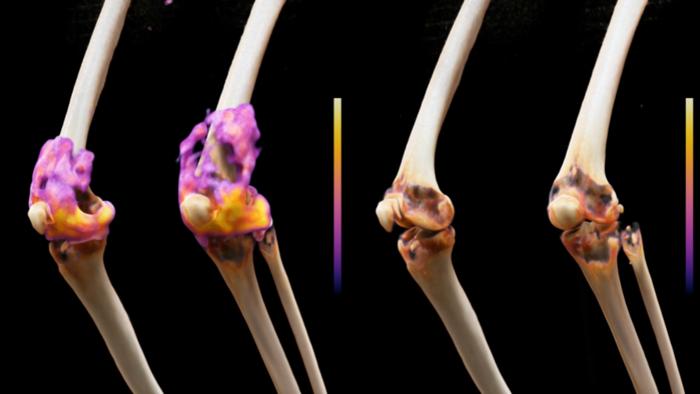
Immunotherapies, like CAR T-cell therapy, are well known in the cancer field. But they can also be used to treat autoimmune disorders. Now, six patients with severe rheumatoid arthritis (RA) have received this treatment at Charité—Universitätsmedizin Berlin. The results from the world’s first clinical trial showed that disease activity decreased substantially in all participants. By the end of the observation period, three of the patients no longer required any medication for their RA.
This work is published in Nature Medicine in the paper, “CD19 CAR-T cell therapy for treatment-refractory seropositive rheumatoid arthritis: a Phase 1 trial.”
RA is a chronic disease with recurrent inflammation and joint swelling which can, as the disease progresses, lead to joint damage. Patients require lifelong medication, including anti-inflammatory drugs and medications that suppress the immune system. Treatment-refractory RA can bring persistent pain, restricted mobility, and a substantial impact on quality of life.
CAR T cells could target the B cells that keep the disease persistent, reset the pathological B-cell memory, and give the B-cell system a fresh start.
The COMPARE study is the world’s first clinical trial to evaluate the safety and efficacy of mivocabtagene autoleucel (miv-cel), an autologous fully human CD19 CAR T cell therapy, in RA. The research team at Charité enrolled six patients with particularly severe disease. The three women and three men, aged 31 to 69, had received up to eight targeted or biologic therapies over the previous ten years, none of which had been sufficiently effective.
All six patients with treatment-refractory, anti-citrullinated protein antibody (ACPA)-positive RA were followed for 36–52 weeks after receiving a single infusion of miv-cel after stopping all disease-modifying antirheumatic drug treatments and after standard lymphodepletion therapy.
For the researchers, the results are highly encouraging: “Disease activity decreased markedly in all six patients. During follow-up of up to one year, three patients were in sustained remission without any medication for rheumatoid arthritis,” reports Gerhard Krönke, MD, who leads the joint Clinical Rheumatology research group at Charité and the German Rheumatology Research Center (DRFZ), a Leibniz Institute. “This is particularly remarkable given that none of the established treatments had previously been able to relieve their symptoms adequately.”
Primary endpoints, the authors note, were “the incidence and severity of cytokine release syndrome (CRS), immune effector cell-associated neurotoxicity syndrome (ICANS) and adverse events (AEs) within the first four weeks after treatment. Secondary and explorative endpoints assessed clinical efficacy and cellular and humoral immune responses.”
In addition, the research team found that levels of the autoantibodies characteristic of RA had declined sharply.
For selected patients with RA who have not responded adequately to treatment, it may in the future be possible to reset the pathological immune memory in a targeted way and thereby stop the persistent inflammation, instead of having to suppress it continuously with drugs.
Nevertheless, CAR T-cell therapy for autoimmune diseases, and for RA in particular, remains experimental. There is not yet any long-term experience with this treatment. In addition, responses to the therapy varied among patients in the current trial: some did not achieve a complete response, and in one case the disease returned after an initial medication-free period of remission. In contrast, the researchers consider the safety data obtained thus far to be encouraging.
“After the participants received the CD19 CAR T cells, we observed only a temporary, mild-to-moderate cytokine release syndrome (CRS) in all participants, which was readily manageable. There were no severe neurological complications or other serious adverse events, and infections were rare,” explains Marie Luise Hütter-Krönke, MD, medical director of the Hematology Early Clinical Trial Unit at Charité’s Department of Hematology, Oncology and Cancer Immunology.
In a second phase of the trial involving ten additional patients, the researchers will compare the new treatment approach with a drug already approved for RA that also targets B cells. In this way, they aim to determine whether CAR T cells have a stronger and longer-lasting effect and whether they can indeed reset immune memory. If the new concept is confirmed in this and other, larger trials, it could ultimately become an alternative for patients whose lives are severely affected and for whom no adequate treatment is currently available.

