
The ability to grow stem cell-derived biological tissues, such as skin and other organs, in the laboratory holds promise for applications in areas including wound healing and transplants. However, while some tissue engineering applications have become a reality, there are challenges, including the observation that stem cells do not always bind to the host material as they theoretically should do, according to an international research team led by chemist Shikha Dhiman, PhD, a professor from Johannes Gutenberg University Mainz (JGU).
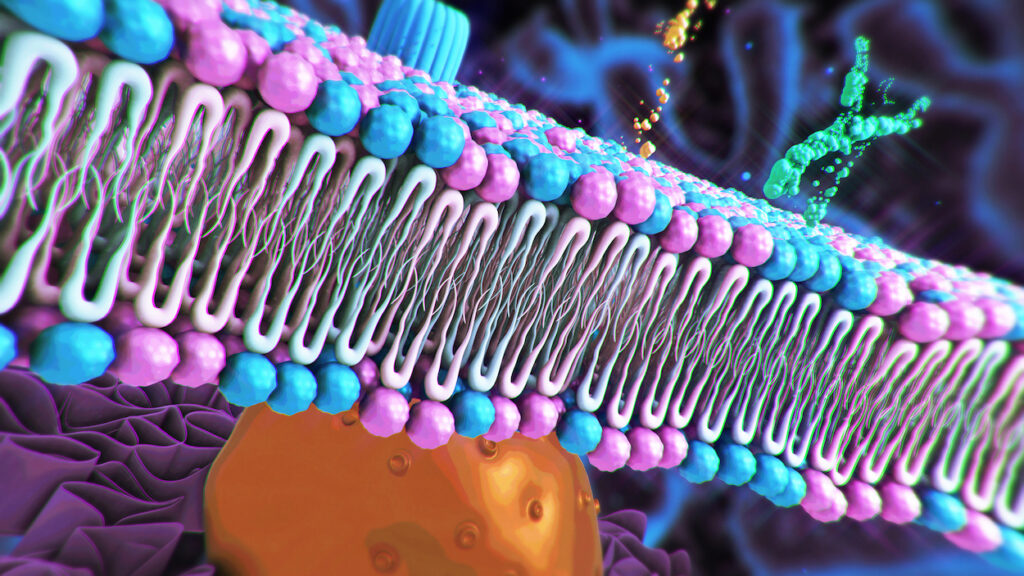
Using super-resolution microscopy to image receptors and ligands, the researchers now suggest the reason for this. “Whether an interaction between model cell membrane and matrix material occurs depends not only on the strength of the interaction but also on the speed at which the binding partner molecules move,” Dhiman explained. “The understanding of this interaction that we have now gained is crucial for the development of effective biomaterials.” The team reported on its findings in PNAS, in a paper titled “Reciprocity in dynamics of supramolecular biosystems for the clustering of ligands and receptors.”
To artificially grow biological tissue in the laboratory, biotechnologists typically place stem cells onto matrix materials, usually gels. These gels dictate how the cells should behave and develop. For this to succeed, however, the cells must bind to the matrix materials. “Supramolecular materials with dynamic and adaptive properties are promising for biomedical use,” the authors wrote. “When synthetic materials contact living cells, their interaction is key for tissue development.” Critical factors include biological recognition and mechanical properties during contact. “The most crucial step is initial molecular recognition between biomaterial ligands and cell membrane receptors,” the team continued. However, understanding this interaction, which is crucial for helping to define the chemical and physical features necessary for optimizing biomaterials, remains challenging.
For a long time, it was assumed that it would be sufficient to add molecules to the gel that bind strongly enough to the cell receptors. In theory, this should work, but in practice it often doesn’t. While most researchers start by optimizing the matrix material to solve this problem, Dhiman, together with Bert Meijer, PhD, a professor from the Eindhoven University of Technology, and colleagues, investigated the first point of interaction, which is the bond between single fibers of matrix and model cell membrane.

For their studies, the researchers used super-resolution microscopy, a technology that allowed them to image individual receptors and ligands. To see how individual molecules behave and track the movements of the molecules under the microscope, the investigators worked with single fibers instead of bulk gel. “This reduction to single fibers was important to clearly understand the interactions,” Dhiman explained. “If the molecules in the model cell membrane and in the fiber move with similar speed, they tend to group together. The binding partners therefore gather on both sides at the contact point between the fiber and the model cell membrane—instead of individual compounds, it is then usually an entire group of receptors and ligands that ensures the binding. Even low binding strengths are then sufficient.”
The researchers further explained in their paper, “Experiments with supramolecular polymers and supported bilayers show that receptor–ligand clustering occurs when both have similar dynamics. This clustering, confirmed by computational studies, is primarily entropy driven.”
Dhiman added, “Until now, the strength of the interaction between ligands and receptors has always been considered. But we discovered that whether a model cell membrane can bind to the fiber depends primarily on the speed at which the binding partner molecules move in the model cell membrane or in the fiber.” If the speed of the ligands in the fiber and of the receptors in the model cell membrane are similar, they can find each other and couple. “Even the weakest bond can lead to interaction between the molecules if their speeds are similar,” said Dhiman. “However, if one of the binding partners moves quickly and the other slowly or not at all, cells will not bind to the gel. Although this is basic research, it now provides a clearer picture of how these interactions work at the molecular level.”
The results could be groundbreaking for tissue engineering, but also for other medical applications such as immunotherapies or drug delivery. Drug delivery involves delivering the active ingredient directly to the site of action to maximize therapeutic effect and minimize side effects. “In the long term, this knowledge could lead to breakthroughs in tissue repair and regenerative medicine, as well as advanced medical implants that work in harmony with the body’s cells,” Dhiman suggested.
Summarizing their findings, the team noted, “These findings explain how superselectivity can arise during the early stages of interaction between supramolecular biomaterials and cells, guiding the design of next-generation bioactive materials for medical applications.”