
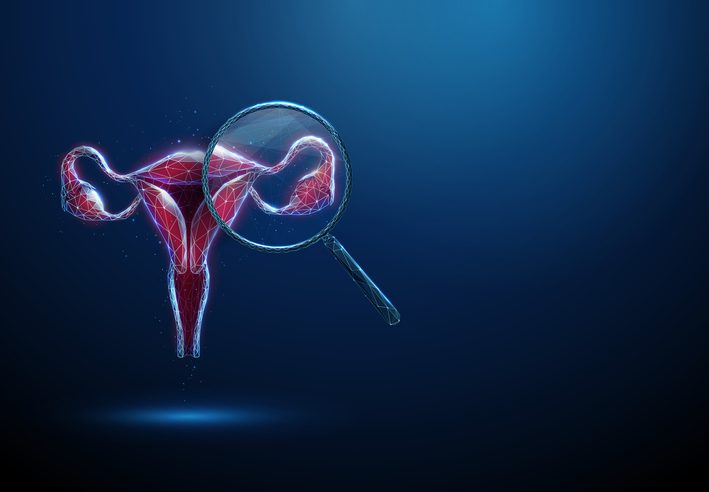
For decades, the postmenopausal ovary has been cast as a retired organ—a fibrotic remnant that stops releasing eggs and then largely sits idle. But a deep look at its proteins tells a different story. Using high-resolution proteomics, researchers found that the ovary continues to reorganize its structure, metabolism, and immune activity for decades after reproduction ends.
Scientists at Northwestern University and the Buck Institute for Research on Aging conducted the study, which analyzed healthy ovarian tissue from 28 postmenopausal women ages 50 to 75. The paper, “The Human Ovary Exhibits Dynamic Molecular Remodeling in the Decades Post-Menopause,” was published in Aging Cell. “I would venture to say most people assume those ovaries are just sitting there doing nothing, similar to the appendix,” said co-corresponding author Francesca Duncan, PhD, an associate professor of reproductive science in medicine at Northwestern University Feinberg School of Medicine. “But that’s what makes this study very different.”
Rather than focusing only on hormones, the team measured the tissue’s proteome. They analyzed the samples using data-independent acquisition mass spectrometry coupled with parallel accumulation–serial fragmentation, or diaPASEF. The approach systematically captured peptide signals across samples, allowing the team to quantify 5,812 protein groups. Differential-abundance testing, multivariate modeling, continuous-age regression, and pathway analyses were then used to identify changes shared across age groups and those that progressed with age.
The analyses converged on a shift from cellular maintenance toward active remodeling. Ovaries from women in their 50s contained more proteins linked to RNA processing, gene regulation, proteostasis, and tissue structure. Ovaries from women 70 and older showed stronger signatures of lipid metabolism and innate immunity. The researchers integrated recurring signals into Buck Postmenopausal Ovary Molecular Signature (BuckPOMS), “a 26-protein consensus molecular signature marked by loss of structural and epithelial-associated programs and gain of extracellular matrix remodeling, inflammatory signaling, and complement activation,” the authors wrote. They also validated two extracellular proteins, WNT4 and fibromodulin, by immunohistochemistry. “What became clear across all these methodologies is that the ovary was not stagnant,” said co-corresponding author Birgit Schilling, PhD, professor and director of the Buck Institute’s Mass Spectrometry Center.
“The ovary is not just a reproductive organ,” added Schilling. “It really influences how somebody ages because it speaks to all these other organs, such as the brain, and also to the bone, and women after menopause experience often a lot of bone problems. So, we think there is a connection between all these organs.”
The study advances a field that has largely concentrated on fertility loss, the menopausal transition, or comparisons spanning the entire lifespan. By narrowing the analysis to the decades after menopause, the researchers produced a reference map of continued ovarian aging. Histologically normal ovaries also showed overlap with senescence-associated programs and proteins previously linked to ovarian cancer, particularly among women in their 60s. The authors stress that this is not evidence of malignancy; instead, healthy aging and cancer may share inflammatory and matrix-remodeling biology. That distinction matters as women routinely live decades after menopause and researchers consider how the ovary may influence bone, brain, cardiovascular, and broader systemic aging.
“This ongoing molecular remodeling that occurs in the postmenopausal ovary challenges the notion that the ovary is an innocent bystander in the post-reproductive period and instead suggests a potentially more active role in systemic aging and chronic disease risk in women,” the authors wrote.
Future prospective studies will need documented age at menopause, hormone-therapy history, larger and more diverse cohorts, and longitudinal health outcomes to distinguish chronological aging from time since menopause and treatment effects. “We do not yet know if there’s ever a point in a woman’s life when this organ is no longer beneficial and it’s actually harmful,” said Duncan. “These results really point to the need to ask this question.”