
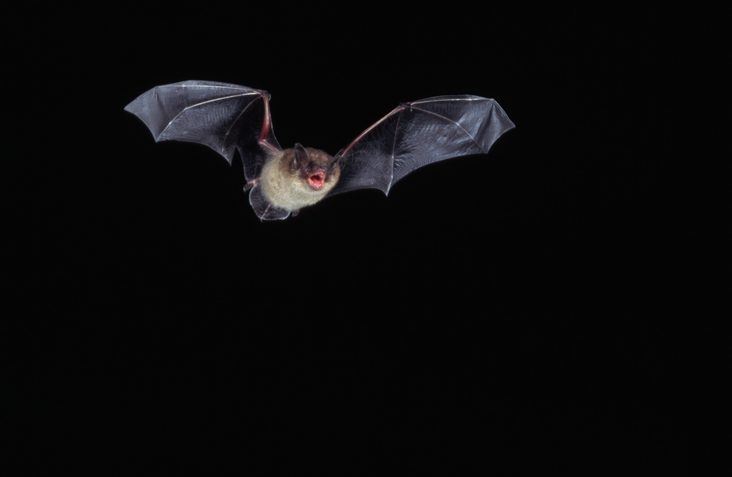
Bats are among the most diverse mammalian species—second only to rodents—and are anomalies in the mammalian world: they fly, have long lifespans for their size, and rarely get cancer.
Scientists now provide insights into these unique characteristics in the new study published in Nature entitled, “Insights into longevity and virus-driven adaptation from Myotis bat genomes.”
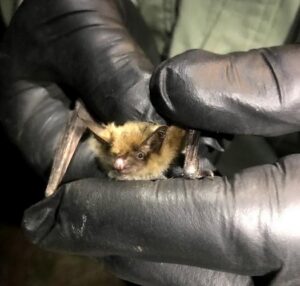
The team generated cell lines and near-complete genome assemblies for eight closely related Myotis bat species. They collected tissue from Myotis bats in the American West using a novel sampling approach. Instead of harvesting organ tissue, the scientists biopsied tiny circular patches from the wings akin to an ear piercing. The tissue was used to grow cell lines and build genomes for the eight species. Using genome-wide screens of positive selection, analyses of structural variation, and experiments, the team identified patterns of adaptation contributing to longevity, cancer resistance and viral interactions.
“Pathogen adaption, longevity, and cancer resistance—they are fundamentally linked,” says Elise Lauterbur, PhD, assistant professor of evolutionary biology at the University of Vermont. “Many of the genes that have adapted to viruses in bats are genes that are also involved in longevity and cancer resistance.”
The team discovered that bats exhibit a unique gene copy mechanism for DNA-repair. And more specifically, they write that their findings show “distinct modes of adaptation to DNA and RNA viruses compared with all other mammals, with bats exhibiting genome-wide over-representation of positive selection for DNA-virus-interacting proteins and elevated rates of copy-number variation for RNA-virus-interacting proteins.”
Characterization of Myotis-specific duplications led the research team to home in on the key immune factor EIF2AK2 (also known as PKR) found in every mammal to understand what made the Myotis bat’s antiviral response so different.

They show that the recurrent evolution of longevity seen in Myotis is associated with positive selection in cancer pathways and demonstrate a unique response to DNA damage in primary cells of the long-lived Myotis lucifugus. “In every single other mammal that has been looked at, there is one copy of this gene,” Lauterbur explains. “That means there is some important pressure keeping it at one copy. In our very special Myotis bats, there are two copies—or so we thought.” When she teased apart the genome, Lauterbur found some Myotis bats had one, two, or even three copies of PKR, suggesting additional copies have a protective effect that promote longevity.
Collaborators conducted experiments on the various cell lines, splicing copies of PKR into different species and then introduced the cells with a pox virus to gauge their reaction and dosed the cells with chemotherapeutic drug to test how they tolerate and repair damage. The team found little brown bats—the longest living bats of the group—responded differently at high doses where cell damage would most likely occur.
This adaptation could be critical for curbing the spread of cancer. As organisms age and cellular processes decline, some particularly long-lived species have developed specialized responses from repairing damaged cells, isolating the damage, to throwing cells out upon damage detection.
While it may be too early to use the unique immune adaptations of bats to solve human pathology, some lessons may be particularly valuable. Moving forward, Lauterbur wants to explore underappreciated adaptations such as changes in gene copy number, she says. “Those kinds of changes can give evolution additional ways to generate diversity and respond to changing environments, and I think we’re only beginning to understand their importance.”