
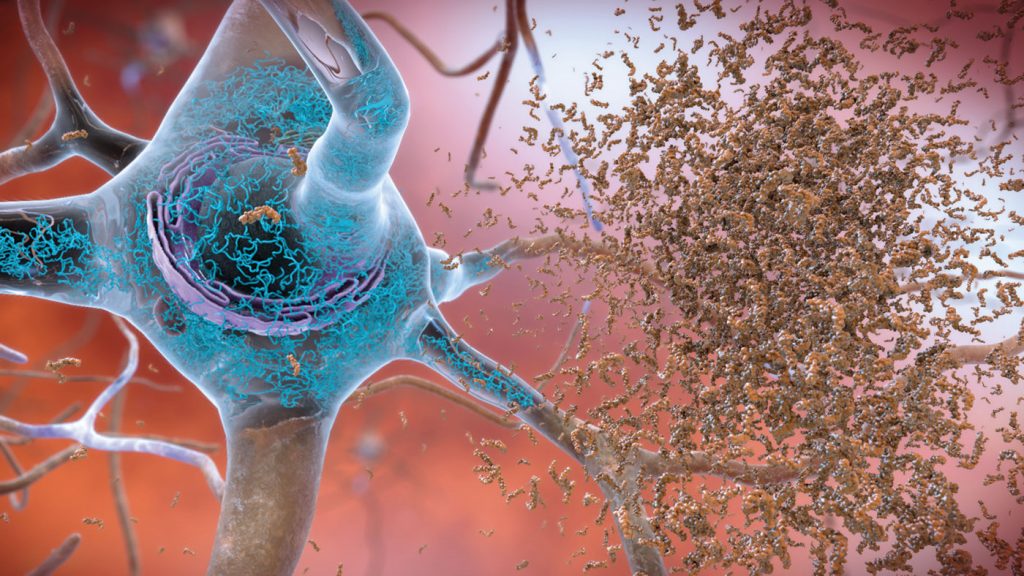
A research team co-led by scientists at Institute for Bioengineering of Catalonia (IBEC) and West China Hospital Sichuan University (WCHSU), working with partners in the U.K., has developed a nanoparticle technology that studies showed can reverse Alzheimer’s disease (AD) in mice. Unlike other types of nanomedicine that rely on nanoparticles as carriers for therapeutic molecules, this approach employs nanoparticles that are bioactive in their own right, and which the team refers to as “supramolecular drugs.”
Instead of targeting neurons directly, the therapy restores proper function of the blood-brain barrier (BBB), the vascular gatekeeper that regulates the brain’s environment. The BBB is a cellular and physiological barrier that separates the brain from the blood flow to protect it from external dangers such as pathogens or toxins. Through their newly reported research the investigators demonstrated that targeting a specific mechanism enables undesirable “waste proteins” produced in the brain to pass through this barrier and be eliminated in the circulation. In Alzheimer’s disease, the main waste protein is amyloid-β (Aβ), the accumulation of which impairs normal neuronal function.
By repairing this critical interface, the researchers observed a significant reduction in brain amyloid-β (Aβ) levels and a reversal of Alzheimer’s pathology in the animal models, with cognitive benefits lasting up to six months following treatment.
Study lead Giuseppe Battaglia, PhD, ICREA research professor at IBEC, principal investigator of the Molecular Bionics Group, and colleagues reported on their findings in Signal Transduction and Targeted Therapy, in a paper titled “Rapid amyloid-β clearance and cognitive recovery through multivalent modulation of blood–brain barrier transport,” in which they stated, “This innovative therapeutic paradigm offers a promising pathway for developing effective clinical interventions, addressing vascular contributions to AD, and ultimately enhancing patient outcomes…The therapeutic trilogy achieved—amyloid clearance, barrier restoration, and sustained cognitive recovery—establishes a blueprint for precision neurovascular medicine.”
The brain is the most expensive organ of the body, consuming 20% of the energy in adults and up to 60% in children. This energy arrives through a vast blood supply, assured by a unique and dense vascular system where each neuron is nourished by one capillary. Our brain contains approximately one billion capillaries, highlighting the vital role of brain vasculature in maintaining health and combating disease. “The BBB consists of aligned endothelial cells supported by pericytes and astrocytes, forming the densest vascular network in the body, with approximately one capillary per neuron,” the team commented in their report.
“The blood‒brain barrier is also a highly selective permeability barrier that safeguards the central nervous system (CNS) from potentially harmful substances while regulating the transport of essential molecules,” the authors further stated. “Its dysfunction is increasingly recognized as a pivotal factor in the pathogenesis of Alzheimer’s disease (AD), contributing to the accumulation of amyloid-β (Aβ) plaques,” they stated. BBB dysfunction has been linked to interconnected pathological cascades, they suggested, one of which involving a shift of low-density lipoprotein receptor-related protein 1 (LRP1) from endothelial cells to pericytes, “… a cell-specific redistribution significantly impairs Aβ clearance capacity and promotes neurovascular uncoupling pathogenesis.”
Normally, the protein LRP1 acts as a molecular gatekeeper. It recognizes Aβ, binds to it through ligands, and ferries it across the blood-brain barrier into the bloodstream, where it can be removed. But this system is fragile. If LRP1 binds too much Aβ too tightly, the transport clogs and the protein itself gets degraded inside the brain barrier cells, leaving fewer LRP1 “carriers” available. On the other hand, if it binds too little, the signal is too weak to trigger transport. In both cases, the result is the same, Aβ builds up inside the brain.
LRP1 is possibly the most studied receptor for both Aβ and more recently, tau processing, the team continued. “Endothelial LRP1 plays a vital role in removing Aβ, and its expression decreases with age.” This decrease is more pronounced in AD patients and animal models, they noted. “The downregulation of LRP1 is strongly correlated with impairment of the BBB and cognitive decline.”
For their study the researchers developed nanoparticles that act as supramolecular drugs, therapeutic agents in their own right rather than carriers of medication. These supramolecular drugs act like a switch that resets the system. By mimicking the ligands of LRP1, they can bind to Aβ, cross the blood–brain barrier, and initiate the process of removing toxic species from the brain. In doing so, they help restore the vasculature’s natural role as a waste-clearing pathway and bring it back to proper function.
![Light sheet fluorescence microscope images of mouse brain 12h after NOT being treated with nanoparticles. The brains were analyzed to see the amount of Aβ plaques accumulation. Red: Aβ plaques. Green: vessels from the blood brain barrier. [Institute for Bioengineering of Catalonia (IBEC)]](https://www.genengnews.com/wp-content/uploads/2025/10/low-res-8-NOT-treated-300x300.jpeg)
Designed with a bottom-up molecular engineering approach, the nanoparticles combine precise size control with a defined number of surface ligands, creating a multivalent platform able to interact with cellular receptors in a highly specific way. By engaging receptor trafficking at the cell membrane, they open up a unique and novel way to modulate receptor function. This precision not only enables the effective clearance of amyloid-β from the brain but also restores balance to the vascular system that maintains healthy brain function.
For their study the researchers worked with mouse models that are genetically programmed to produce larger amounts of Aβ protein and develop a significant cognitive decline mimicking Alzheimer’s pathology.
The team administered three doses of the supramolecular LRP1-targeted polymersome drugs—A40-Pos—and afterwards monitored the disease. “Only one hour after the injection we observed a reduction of 50-60% in Aβ amount inside the brain,” reported co-first author Junyang Chen, a researcher at the West China Hospital of Sichuan University and PhD student at University College London (UCL). “In AD model mice, this intervention significantly reduced brain Aβ levels by nearly 45% and increased plasma Aβ levels by 8-fold within two hours, as measured by ELISA,” the researchers stated.
![Light sheet fluorescence microscope image of mouse brain 12h after being treated with nanoparticles. The brains were analyzed to see the amount of Aβ plaques accumulation. Red: Aβ plaques. Green: vessels from the blood brain barrier. [Institute for Bioengineering of Catalonia (IBEC)]](https://www.genengnews.com/wp-content/uploads/2025/10/low-res-9-Treated--300x300.jpeg)
The most striking data were the therapeutic effects of treatment. Researchers conducted various experiments to analyze the behavior of the animals and measure their memory decline over several months, covering all stages of the disease. In one of the experiments, they treated a 12-month-old mouse (equivalent to a 60-year-old human) with the nanoparticles and analyzed the animal’s behavior after six months. The result was impressive: the mouse, aged 18 months (comparable to a 90-year-old human), had recovered the behavior of a healthy mouse. “The deployment of LRP1-targeting polymersomes has facilitated rapid Aβ clearance and initiated significant changes in the BBB, leading to improved cognitive outcomes … Overall, the results of the behavioral experiments indicated that animals treated with A40-POs presented improved memory and learning capabilities, enhanced cognition, and elevated quality of life.”
Battaglia commented, “The long-term effect comes from restoring the brain’s vasculature. We think it works like a cascade: when toxic species such as amyloid-beta accumulate, disease progresses. But once the vasculature is able to function again, it starts clearing Aβ and other harmful molecules, allowing the whole system to recover its balance. What’s remarkable is that our nanoparticles act as a drug and seem to activate a feedback mechanism that brings this clearance pathway back to normal levels.”
Added Lorena Ruiz Perez, PhD, a researcher at the Molecular Bionics group from the Institute for Bioengineering of Catalonia (IBEC) and Serra Hunter assistant professor at the University of Barcelona (UB). “Our study demonstrated remarkable efficacy in achieving rapid Aβ clearance, restoring healthy function in the blood–brain barrier and leading to a striking reversal of Alzheimer’s pathology.”
The authors concluded, “In essence, this work illustrates that the BBB is not merely an obstacle to be bypassed but a dynamic and reparable interface whose dysfunction can be therapeutically reversed … We establish a compelling case for BBB modulation and LRP1-mediated Aβ clearance as a transformative foundation for future AD therapies.”