
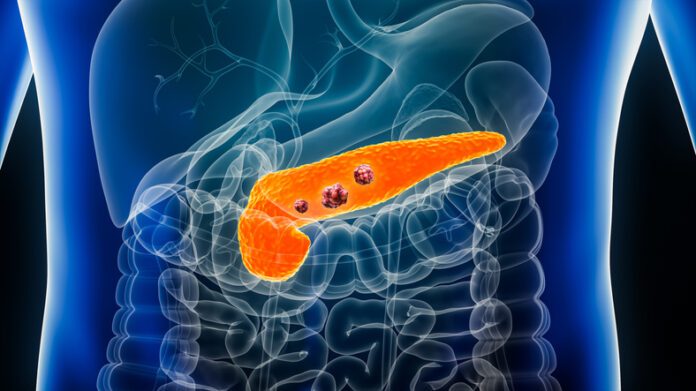
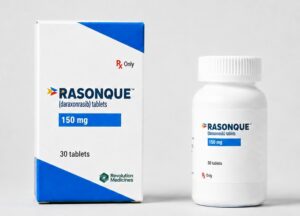
Revolution Medicines (Nasdaq: RVMD) appeared to have the makings of another strong stock surge this past week when the FDA approved the company’s historic oral therapy Rasonque™ (daraxonrasib), the first RAS inhibitor to be authorized as a targeted treatment for the most common form of pancreatic cancer.
Instead, Revolution’s shares stayed relatively flat as investors sat on the proverbial sidelines, apparently split over whether Rasonque has been priced too high to achieve the millions of short-term dollars and billions of longer-term dollars in sales projected by various analysts.
Thursday looked slightly better, as Revolution’s shares climbed 2.65% to $221.15, but the stock skidded 6% Friday, closing the week at $207.88 on a mix of profit-taking plus an overall down day for major markets, after Federal Reserve Chair Kevin Warsh suggested that the central bank may raise interest rates unless inflation slows down.
Just four months ago in April, Revolution shares rocketed 54% after the company announced dazzling data from its Phase III RASolute 302 trial (NCT06625320) evaluating Rasonque in patients with metastatic pancreatic ductal adenocarcinoma (PDAC) who had been previously treated. In the trial’s overall intent-to-treat population, daraxonrasib showed a median overall survival (OS) of 13.2 months, nearly double the 6.7 months demonstrated for standard-of-care chemotherapy.
That data persuaded the FDA to approve Rasonque for adults with PDAC who have received at least one prior systemic therapy or who are not candidates for multiagent systemic therapy.
Notably, the FDA gave its approval 6.5 months ahead of its March 11, 2027, targeted decision date under the Prescription Drug User Fee Act (PDUFA) following a Priority Review, after the agency had granted Revolution its Breakthrough Therapy and Orphan Drug designations for Rasonque—plus acceptance into the Commissioner’s National Priority Voucher (CNPV) pilot program. CNPV vouchers entitle companies to reviews of their final applications within a target timeframe of 1–2 months rather than the standard 10–12 months.
“Unprecedented results”
“This drug showed unprecedented results in an area of high unmet need,” Angelo de Claro, MD, director of the FDA’s Oncology Center of Excellence, said in the agency’s statement announcing the approval of Rasonque.
The FDA approved Rasonque, a first-in-class RAS(ON) multi-selective and mutant-selective inhibitor, to treat adults with PDAC who have received at least one prior systemic therapy or who are not candidates for multiagent systemic therapy.
The now-completed RASolute 302 trial is one of five Phase III studies in which Rasonque is being studied. Three of the four are ongoing: RASolve 301 in previously treated RAS mutant non-small cell lung cancer (NSCLC; NCT06881784); RASolute 303 in first-line metastatic PDAC (NCT07491445); and RASolute 304 in Adjuvant for resectable PDAC (NCT07252232). Revolution recently launched the other Phase III trial, RASolute 309, in first-line RAS G12D metastatic PDAC.
New therapies are especially noteworthy in pancreatic cancer because it is one of the most difficult cancers to treat, with an overall five-year survival rate of 13%, according to the American Cancer Society, stretching from 3% for metastatic (Stage 4) to 44% for localized (Stages 1 and 2).
In a conference call with analysts just after the FDA approval, Mark A. Goldsmith, MD, PhD, Revolution’s CEO and chairman, and other executives quantified their potential patient populations: According to the Patient Metrics module of Oracle Life Sciences’ CancerMPact oncology decision support platform, ~55,000 patients are diagnosed annually with de novo or recurrent PDAC—of which 74% or about 41,000 advance to first-line treatment. Of those first-line patients, 46% (about 19,000) proceed to second-line treatment, according to a 2022 study cited by Revolution.
But as attention-getting to investors as the approval was the list price at which Revolution plans to market Rasonque, with the company disclosing a wholesale acquisition cost (WAC) of $39,800 per month—which would translate to $477,600 per year absent discounts, more than twice the list price of a year’s supply of the best-selling drug with a pancreatic cancer indication, Merck & Co. (NYSE: MRK)’s blockbuster cancer immunotherapy Keytruda® (pembrolizumab).
Until the approval, Revolution had offered Rasonque at no cost to more than 2,000 patients enrolled in Revolution’s Expanded Access Program, which the company launched upon FDA “Safe to Proceed” authorization in May and closed upon agency approval of Rasonque.
“With the 2,000+ patient EAP, the pool appears to us as largely identified rather than needing to be built—a positive for a quick launch and uptake, in our view,” Gregory Renza, MD, managing director covering biotechnology with Truist Securities, and two colleagues wrote in a research note.
“Next oncology titan”
“The approval transforms RVMD into a commercial-stage oncology company and establishes the first pillar of a durable, multi-tumor RAS franchise,” added Renza and colleagues Supawat Thongthip, PhD, and Anish Nikhanj, PhD. “With daraxon setting a new SOC [standard of care] in 2L PDAC and expansion opportunities across earlier-line PDAC, NSCLC and CRC, we believe RVMD remains on course to emerge as the next oncology titan.”
Renza and colleagues have projected Rasonque sales of just $12.7 million in the third quarter, growing to $101.7 million by year’s end, roughly $989 million next year, and $2.3 billion by 2028 as Truist’s projections begin to include treatment of first-line PDAC patients. Renza and colleagues have raised their firm’s 12-month price target on Revolution shares by 3.5%, from $231 to $239, maintaining Truist’s “Buy” rating on the stock.
Leonid Timashev, PhD, a director and biotechnology analyst at RBC Capital Markets specializing in the neurology, oncology, and cardiology sectors, and colleagues have offered even rosier forecasts for Rasonque. Timashev and colleagues project that the pancreatic cancer drug will rack up $28 million in third-quarter sales—catapulting to $148 million in the fourth quarter, approximately $1.1 billion in 2027, and as much as about $11.5 billion in peak-year sales, according to Reuters.
Timashev also raised RBC’s price target on Revolution shares by 24%, from $203 to $251, and maintained the firm’s “Outperform” rating on the stock.
“Flexibility beyond 2L”
Maury Raycroft, PhD, equity analyst at Jefferies, noted that Revolution’s label for Rasonque was sufficiently broad that it “provides flexibility beyond 2L [second-line treatment], allowing physicians to use Rasonque in some un-tx pts. [un-treated patients] deemed ineligible for multi-agent tx [therapy].” He cited comments by Revolution executives during a conference call that noted 26% of metastatic PDAC patients historically received no systematic treatment—a percentage Raycroft said has also been reported at 33.5% in one past study.
“With no defined criteria for chemo[therapy] ineligibility, the label is clearly broader than a conventional 2L approval,” Raycroft commented in a research note.
- The availability of Rasonque “could also complicate U.S. enrollment” in Erasca’s planned Phase III trial of ERAS-0015 in first-line PDAC, “increasing the importance of ex-U.S. enrollment and trial design.”
- Rasonque could also potentially de-risk development by Tango Therapeutics (Nasdaq: TNGX) of vopimetostat, an oral, MTA-cooperative PRMT5 inhibitor developed to treat solid tumors with MTAP deletion. Revolution and Tango are partnering on a combination therapy of vopimetostat and daraxonrasib, with the companies announcing positive data in June from a Phase I/II trial (NCT06922591) in patients with second and third line PDAC, namely a six-month progression-free survival rate of 90%.
$281M sales forecast for 2026
Faisal Khurshid, a managing director and equity research analyst with Jefferies, projects much stronger sales for Rasonque this year than Truist or RBC at $281 million for this year—nearly double (95% above) a consensus analyst forecast of $148 million for all of 2026. Khurshid also said Revolution’s $39,800 monthly WAC—which translates to a net price of $28,000-$32,000—was “mostly in line with [Wall] Street expectations” of a $40,000 monthly WAC.
“Rasonque approval marks an impt [important] win for the company and for patients,” Khurshi declared in a research note. “The approval caps a strong run for the company, and we think the co[mpany] is well positioned both with the launch and data catalysts.”
Those catalysts include an announcement of updated clinical data and Revolution’s colorectal cancer development strategy, expected during the fourth quarter, as well as Phase III data in NSCLC expected in 2027.
Khurshid raised Jefferies’ price target on Revolution shares by about 12%, from $242 to $270. Also raising their price targets on Revolution shares:
- H.C. Wainwright (Robert Burns)—Up 44% from $195 to $280, maintaining “Buy” rating.
- Evercore ISI (Cory Kasimov)—Up 39% from $230 to $320, maintaining “Buy” rating.
- Oppenheimer (Jay Olson)—Up 13% from $230 to $260, maintaining “Outperform” rating.
- Wedbush Securities (Robert Driscoll, PhD)—Up 12% from $201 to $225, maintaining “Outperform” rating.
- J.P. Morgan (Brian Cheng)—Up 8% from $227 to $246, maintaining “Buy” rating.
- Raymond James (Sean McCutcheon, PhD)—Up 8% from $230 to $248, maintaining “Strong Buy” rating.
“Since we initiated in March, we have called out RVMD as the most impt co [important company] in oncology today, and this remains true, in our view,” Khurshid added.
Leaders and laggards
- Biohaven (NYSE: BHVN) shares jumped 18% from $14.38 to $16.95 after the company said it had granted to SK Biopharmaceuticals an up-to-$795 million exclusive worldwide license to Biohaven’s Kv7 ion channel platform, led by opakalim (BHV-7000), a next-generation, selective Kv7.2/7.3 potassium channel activator being developed for focal epilepsy, with topline results from the Phase II/III RISE3 trial (NCT06309966) expected later this year. The companies have agreed to advance opakalim through development and FDA approval. SK has agreed to pay Biohaven $400 million cash—$350 million at closing and $50 million payable in 2027—plus up to $150 million tied to achieving development and regulatory milestones, and royalties on global net sales of opakalim. SK agreed to oversee Kv7 program costs, including $245 million in specified Kv7 future milestone payments and mid-single-digit royalties to Knopp Biosciences, from which a Biohaven predecessor acquired the platform in 2022 for up to $1.24 billion. SK is part of a privately held, family-owned chaebol or conglomerate whose parent holding company is public, SK Inc. (Korea Exchange: 034730).
- BioXcel Therapeutics (Nasdaq: BTAI) shares plunged 75% from 72 cents to 18 cents Friday after the artificial intelligence-based neuroscience drug developer announced that it and two subsidiaries, OnkosXcel Therapeutics and OnkosXcel Employee Holdings, began voluntary Chapter 11 proceedings in the U.S. Bankruptcy Court for the District of Delaware. The Chapter 11 filing is intended to enable a court-supervised sale process that is expected to include the auction of substantially all of BioXcel’s assets. BioXcel has already agreed to sell substantially all of its assets to a subsidiary of Teva Pharmaceutical Industries (NYSE: TEVA), including Igalmi® (dexmedetomidine) sublingual film and the related pending supplemental New Drug Application of BXCL501 for potential at-home (outpatient) use for the acute treatment of agitation associated with schizophrenia or bipolar I or II disorder in adults. Teva agreed to serve as a “stalking horse” bidder at a future Chapter 11 auction of BioXcel assets.