
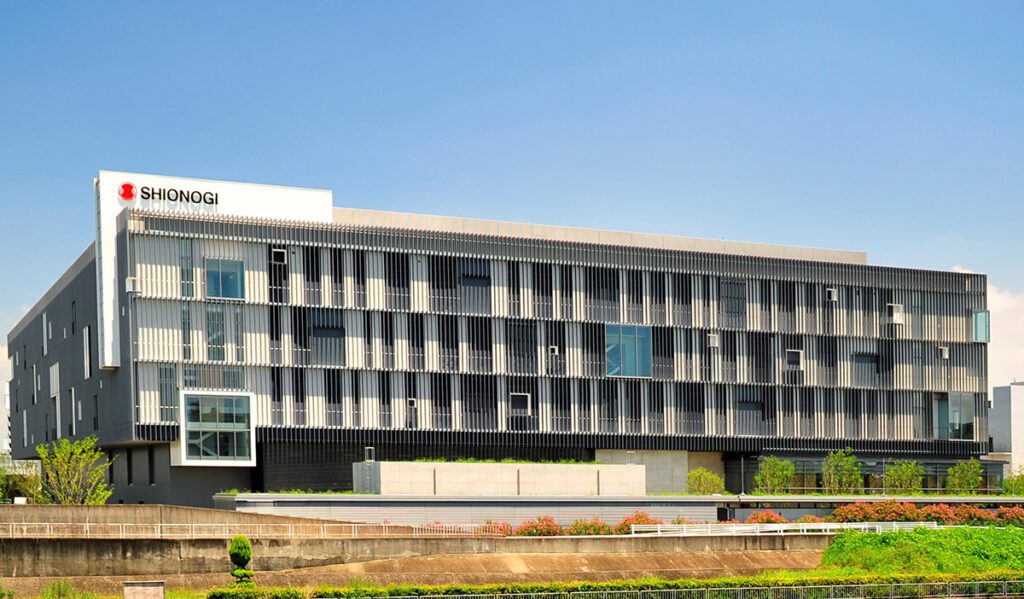
Shionogi has agreed to acquire IntraBio for $2 billion, in a deal intended to expand the Japanese pharma’s rare disease portfolio with a drug marketed in the U.S. and European Union for neurological manifestations of Niemann-Pick disease type C (NPC).
The drug, Aqneursa® (levacetylleucine), was approved by the FDA in September 2024 for neurological manifestations of Niemann-Pick disease Type C (NPC) in adults and children weighing 15 kg (33 pounds) or more, and by the European Medicines Agency (EMA) in January.
On September 18, the FDA approved a supplemental New Drug Application expanding the label of Aqneursa to become the first and to date only drug approved for the treatment of ataxia in ataxia-telangiectasia (A-T) patients weighing 15 kg (33 pounds) or more. Aqneursa is now under review by the EMA for adults and children diagnosed with A-T.
“The planned acquisition of IntraBio actively demonstrates Shionogi’s solid commitment to building a leading global rare disease business,” Isao Teshirogi, PhD, Shionogi’s president, CEO, and representative director said Monday in a statement. “Bringing Aqneursa to Shionogi after our acquisition of Radicava® will deepen our commitment to rare disease communities, expand our capabilities and strengthen our portfolio as we advance future innovation for patients with significant unmet needs.”
Investors initially appeared less enthusiastic about the IntraBio acquisition, as Shionogi’s shares traded on the Tokyo Stock Exchange fell about 4.5% Monday, from ¥2,786 ($17.61) to ¥2,661 ($16.82)—but the stock bounced back Tuesday, all but recovering with a 3.8% gain that sent shares up to Y2,763 ($17.47).
However, Sumant Kulkarni, a senior analyst covering biotechnology with Canaccord Genuity, viewed the deal more positively.
“In summary, this transaction underscores our view that companies with approved products for rare indications, neuro or otherwise, present significant scarcity value for strategics and investors alike,” Kulkarni wrote Monday in a research note. “We are not entirely surprised by this development, but are encouraged by the upfront consideration.”
Kulkarni added: “In fact, we were surprised that IntraBio had remained independent for the time it did, but the timing makes sense given the recent approval for A-T, which adds another leg to its story.”
‘Plenty of financial firepower’
The acquisition of IntraBio comes two months after Teshirogi told Bloomberg News in an interview that Shionogi was “actively pursuing” at least three acquisition opportunities: “From a cash flow perspective, we’ve become a company with plenty of financial firepower. If a good opportunity comes along, there’s absolutely no reason for us to hesitate over any M&A.”
Teshirogi also said Shionogi was looking to expand its U.S. and European manufacturing capacity in order to diversify its production base beyond Japan and thus reduce geopolitical risk over the next decade.
To that end, Shionogi pursued and won a U.S. government contract in April to establish a Stateside drug product manufacturing site for its Fetroja® cefiderocol), a cephalosporin antibacterial indicated to treat adults with complicated urinary tract infections (cUTI) including pyelonephritis; as well as hospital-acquired and ventilator-associated bacterial pneumonia (HABP/VABP).
The contract—awarded through the Biomedical Advanced Research and Development Authority’s (BARDA) Project BioShield—was initially funded at $119 million with multiyear options for a total of up to $482 million.
Shionogi signaled its intent to focus on rare disease drugs in April when it agreed to acquire Radicava (edaravone), a small molecule treatment for amyotrophic lateral sclerosis (ALS), from Tanabe Pharma for $2.5 billion and a potential royalty on future sales. At the time, Shionogi said the deal would benefit it by adding approximately $700 million in annual global sales during the company’s current 2026 fiscal year, which began on April 1.
59% leap
That would represent a 59% leap from Shionogi’s entire FY 2025 earnings before interest taxes, depreciation, and amortization (EBITDA) of ¥187.72 billion ($1.187 billion), up 4.7% from ¥179.296 billion ($1.134 billion) in FY 2024.
Radicava generated ¥94.491 billion ($597.582 million) in the 2025 fiscal year that ended on March 31 of this year.
“Through this acquisition, the Company aims to strengthen its business foundation and enhance its corporate value over the medium to long term by maximizing the value of edaravone and expanding its provision of solutions in the rare disease area,” Shionogi explained in reporting fiscal Q1 (April-June) 2026 results in August.
Radicava is marketed under that name as an intravenous (IV) infusion, and as an oral suspension called Radicava ORS. The IV version was approved by the FDA in 2022 and the oral suspension version, two years later.
Based in Austin, TX, IntraBio was established in 2015 to discover, develop, and commercialize therapies for neurodegenerative diseases with high unmet medical need, by commercializing research generated by its scientific co-founders—Professors Grant Churchill, PhD, Antony Gallone, PhD, and Frances Platt, PhD, all of the University of Oxford; and Michael Strupp, MD, of the University of Munich.
Privately held IntraBio finished last year with a $35.8 million net loss on net sales of $67.867 million—all of it generated from sales of Aqneursa—according to data disclosed by Shionogi in its announcement of the acquisition.
Shionogi is expected to close on its acquisition of IntraBio during this quarter, subject to customary closing conditions.