


Director, Global Biologics Marketing & Strategic Collaborations, USP
Pharmaceutical manufacturing has long relied on process controls and laboratory testing to ensure product quality. Those tools remain essential, but advances in analytical science are making it possible to understand manufacturing processes in real-time. The result is not a replacement for established quality systems, but a stronger foundation of information for developing, scaling, and producing medicines.

Principal Scientist, Global Biologics Department, USP
Process analytical technology (PAT), the framework for designing, analyzing, and controlling manufacturing processes through timely measurements of critical process parameters (CPPs) and critical quality attributes (CQAs), has helped accelerate this transformation. By integrating measurement technologies, sampling strategies, data analysis, and process knowledge, PAT enables manufacturers to observe processes as they operate and gain deeper insight into the relationships between process conditions and product quality.
More broadly, PAT reflects a fundamental objective shared across pharmaceutical manufacturing: generating measurements that are timely, representative, and meaningful enough to support scientific understanding as well as operational decisions.
That objective reflects a broader evolution in how manufacturers think about quality. Rather than viewing quality primarily as something confirmed through testing, manufacturers increasingly seek to understand how process behavior and product performance interact throughout the manufacturing lifecycle. The goal is not simply to generate more data, but to generate insight that explains why a process behaves as it does and how that behavior influences product quality. In that sense, the future of pharmaceutical manufacturing may be defined by a deeper understanding of how quality is created and maintained.
From testing to understanding
Over the past two decades, the industry has advanced quality by design (QbD), which emphasizes building quality into manufacturing through a thorough understanding of CPPs and CQAs. PAT reinforces that approach by showing how processes behave and how variability may influence product quality.
These insights matter because CQAs are linked to the safety, effectiveness, and consistency of medicines delivered to patients. In-process measurements can help manufacturers understand how process variability affects those CQAs and support strategies that maintain quality throughout production.
PAT’s value is not tied to any single technology. Whether monitoring fermentation, tracking moisture during drying, measuring blend uniformity, or assessing product attributes during production, the objective is the same: stronger process understanding through timely measurements.
This focus aligns with the United States Pharmacopeia (USP)’s longstanding role in measurement science, including standards, reference materials, and guidance related to spectroscopy, chemometrics, analytical method development, process measurement technologies, representative sampling, real-time release testing, and lifecycle management.
What is becoming measurable?
One of the most significant developments in PAT is the growing ability to measure attributes that were previously difficult to monitor in a timely way. Advances in spectroscopy and process analytics have expanded measurement beyond basic process parameters. Near-infrared spectroscopy, Raman spectroscopy, imaging systems, and other tools can assess material attributes such as concentration, moisture, particle characteristics, and composition during manufacturing.
In monoclonal antibody production, for example, analytical technologies can help monitor cell culture performance, product concentration, aggregation, glycosylation patterns, and other quality-related characteristics. These measurements give manufacturers earlier insight into how process conditions influence product attributes.
Such capabilities support real-time release testing, which uses process data, material attribute measurements, and control strategies to evaluate product quality during manufacturing rather than relying exclusively on end-product testing. Potential benefits include faster access to quality data, earlier identification of deviations, more efficient investigations, and better-informed decisions. As manufacturers gain a deeper understanding of how process variability influences product quality, they can develop more effective strategies to control variability at its source. This can translate into fewer rejected batches, improved yields, more reliable manufacturing operations, and greater confidence that patients receive medicines with consistent quality and performance. In that respect, the value of process understanding extends well beyond measurement itself to the outcomes it enables.
Better measurements
As measurement technologies advance, one reality remains unchanged: analytical results are only as dependable as the samples on which they are based.
USP’s recent work on representative sampling and the theory of sampling emphasizes this principle. Even when a measurement occurs directly in a manufacturing process, sampling still occurs because the analytical system can observe only a fraction of the available material. For the resulting data to support reliable decisions, the measured material must adequately represent the larger batch or process stream. Representative sampling strategies are therefore essential because they help ensure that analytical results capture the variability present within the process and provide a sound basis for understanding product quality.
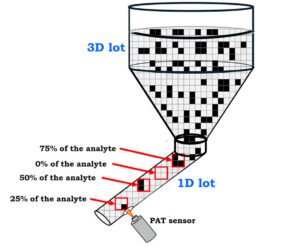
If measurements capture only a limited portion of that variability, the resulting data may not represent the overall process. Composite and representative sampling strategies can help by ensuring that all parts of a batch or process have an opportunity to contribute to the measurement.
Multiple layers of characterization are also needed. Cross-cutting, platform-specific, product class-specific, and product-specific standards each contribute information that helps manufacturers characterize variability and understand quality more comprehensively.
From measurements to decisions
Collecting data is only part of the challenge. Equally important is turning measurements into information that can support scientific and manufacturing decisions.
Tools such as chemometrics, multivariate analysis, soft sensors, and process models help extract meaning from large datasets and identify relationships between process parameters, material attributes, and quality outcomes.
Artificial intelligence and machine learning are receiving considerable attention, but they are only one part of a larger analytical ecosystem. Their value depends on representative sampling, well-characterized measurements, and strong process understanding. For example, mRNA therapeutics can generate large volumes of data across transcription, purification, and formulation, but meaningful insights require confidence that those measurements reflect the process.
Process understanding also extends beyond regulatory compliance. Greater visibility into process performance can improve technology transfer, support scale-up, reduce investigation timelines, and strengthen manufacturing reliability.
Looking ahead
The future of pharmaceutical manufacturing is unlikely to be defined by any single instrument, platform, or analytical technique. It will be shaped by advances in measurement science and the industry’s ability to translate measurements into process understanding.
USP has long helped industry establish confidence in analytical measurements through standards, guidance, reference materials, and general chapters. As bio-manufacturing evolves, USP’s role remains fundamentally the same: helping ensure that measurements used to understand pharmaceutical products and processes are scientifically sound, representative, and fit for purpose. To that end, USP has identified a need to support bioprocess scientists implementing in-line and at-line testing via documentary and physical standards.
For USP and the broader pharmaceutical community, the opportunity ahead is to strengthen the connection between measurement, understanding, and quality. In-process measurements can help manufacturers see how process variability influences product quality, support the delivery of safe and effective medicines, and enable more efficient operations. That is the promise of quality by understanding: using measurement science to clarify process behavior, product quality, and the sources of variability that connect them.
Brian McNally, PhD, is director of global biologics marketing and strategic collaborations at USP. Anthony Blaszczyk, PhD, is a principal scientist in the global biologics department at USP.

