

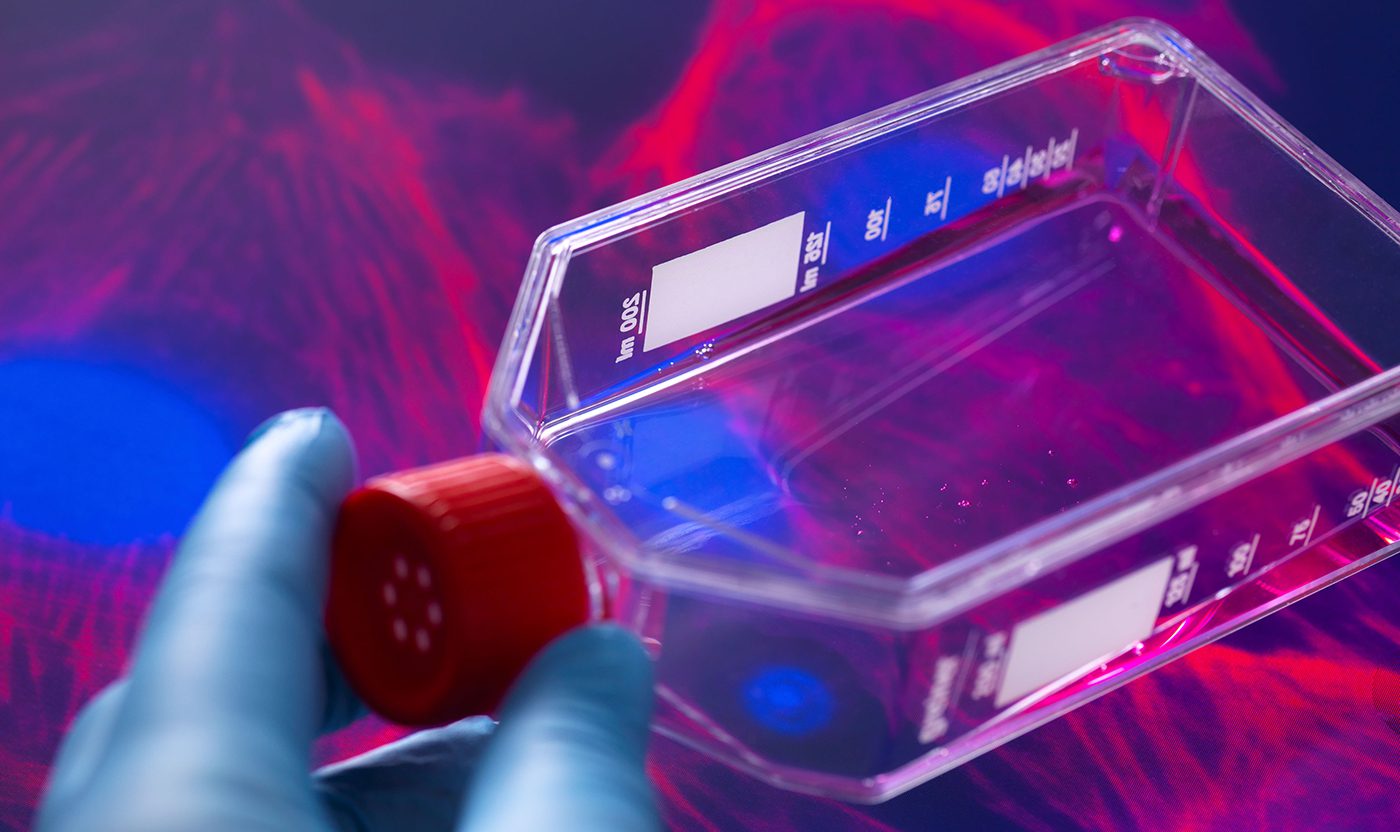
As a graduate student in the early 1980s, part of my funding came through a research assistantship in a cell-culture lab. One of my regular responsibilities was whipping up batches of culture media. I mixed familiar ingredients such as amino acids alongside components that sounded more like something from a witch’s brew than a scientific protocol, including chick-embryo extract and horse serum. Beyond carefully measuring the same volumes from batch to batch, our idea of media optimization was simply buying horse serum from the same herd.
Cell culture has come a long way since then.
Today, media optimization is a sophisticated scientific discipline that influences nearly every aspect of cell culture, from academic research to commercial biomanufacturing. The composition of a culture medium affects cell growth, productivity, product quality, impurity profiles, downstream purification, and, ultimately, manufacturing economics. As biologics manufacturers pursue increasingly intensified production processes, optimizing media has become one of the industry’s most important—and most complex—challenges.
That complexity was the focus of a recent discussion with Bhanu Chandra Mulukutla, PhD, research fellow and group leader at Pfizer, and Wenge Wang, PhD, associate research fellow and group leader at Pfizer.
“The first challenge is understanding more about the cells you’re dealing with and the product you’re trying to make,” says Mulukutla. “Growth characteristics, metabolism, impurity profiles, and product requirements all influence how media should be optimized.”
Different production cell lines, such as CHO and HEK293 cells, have distinct nutritional needs and metabolic behaviors. A formulation that performs well for one therapeutic protein might be far from optimal for another. Developers must simultaneously balance multiple priorities, supporting robust cell growth while maximizing productivity, preserving product quality, minimizing impurities, and ensuring downstream purification remains efficient.
Beyond simply adding more nutrients
One of the biggest misconceptions in media development is that adding more nutrients automatically produces better results. In reality, every nutrient has an optimal operating window.
“Cells sense nutrient levels,” Mulukutla explains. “Too little is obviously bad, but too much is also bad.”
Even glucose, one of the most fundamental energy sources, becomes problematic when supplied in excess. Elevated nutrient concentrations can trigger metabolic shifts that reduce productivity, alter protein quality, and generate unwanted waste products.
The challenge becomes even greater as manufacturers intensify production processes. Higher-performing cell cultures require significantly greater nutritional support, but physical chemistry imposes practical limits. Several amino acids—including tyrosine, cysteine, leucine, isoleucine, and valine—have relatively poor solubility, making it difficult to formulate increasingly concentrated media.

Developers frequently reach a point where desired nutrient concentrations simply cannot dissolve. That limitation creates a cascade of manufacturing complications. Additional feeds become necessary. Mixing procedures become more complex. Filtration slows because of increased viscosity. Preparation times lengthen, and precipitation risks increase.
In other words, media optimization is constrained not only by biology, but also by chemistry and manufacturing practicality.
Intensification raises the stakes
These challenges become even more significant in intensified fed-batch manufacturing. Unlike conventional fed-batch processes, intensified operations drive cultures to much higher viable cell densities while sustaining elevated productivity over longer production runs.
That combination dramatically increases nutritional demand. Maintaining adequate nutrient availability without excessive feed additions becomes a delicate balancing act. Because all nutrients cannot be supplied in a single highly concentrated formulation, manufacturers often rely on multiple feeds, particularly for poorly soluble amino acids like tyrosine and cysteine. Meanwhile, branched-chain amino acids—leucine, isoleucine, and valine—present another obstacle, because cells consume them rapidly while their solubility remains relatively low. As nutrient requirements increase, formulation complexity grows accordingly.
Even when adequate nutrition is supplied, another challenge begins to emerge—waste accumulation. Unlike perfusion systems, intensified fed-batch processes continually add nutrients without removing spent media. Over 12 to 14 days, metabolic byproducts steadily accumulate. Those byproducts can inhibit cell growth, reduce productivity, and negatively influence product quality. Host-cell proteins can also reach elevated concentrations, creating additional purification challenges and potentially affecting product stability.
As the Pfizer experts note, the objective is no longer simply maximizing titer. Developers must simultaneously optimize productivity, cell health, impurity control, manufacturability, and final product quality.
Engineering better cells
Rather than focusing exclusively on media composition, Pfizer has adopted a broader systems-level strategy. After nearly a decade of studying cellular metabolism using omics technologies and systems biology, researchers have identified pathways responsible for generating problematic metabolic byproducts. That understanding has enabled entirely new engineering approaches.
One strategy involves carefully maintaining nutrient concentrations near the lower end of their healthy operating ranges. “When nutrients aren’t in excess,” Mulukutla says, “cells are smart enough to use them for their intended purpose—growth and protein production—rather than funneling them into byproduct formation.”
Another approach directly modifies cellular metabolism. Pfizer researchers have engineered cells by knocking out key enzymatic steps in pathways responsible for producing unwanted metabolic waste. For branched-chain amino acids, eliminating the first step in their breakdown pathway reduced cellular consumption by approximately 30 to 40%. Instead of converting those amino acids into waste products, engineered cells use nutrients more efficiently.
The benefits extend beyond metabolism. Reduced amino-acid demand frees valuable osmolality capacity within the media, allowing scientists to incorporate higher concentrations of other nutrients needed for intensified production.
Perhaps the most intriguing strategy addresses one of media optimization’s oldest challenges. Instead of trying to dissolve more tyrosine and cysteine into increasingly concentrated feeds, Pfizer researchers engineered cells to make them capable of intracellularly synthesizing those amino acids.
Using more soluble precursor molecules—specifically, synthesizing tyrosine from phenylalanine and cysteine from methionine—engineered cells generate their own supplies of these otherwise difficult-to-deliver nutrients. The approach reduces dependence on highly concentrated external feeds while simplifying formulation.
Combined with reduced byproduct formation and improved nutrient efficiency, these engineered cell lines support higher cell densities without proportionally increasing media complexity. Pfizer is now integrating multiple engineering strategies into unified production cell lines designed to support intensified manufacturing across its broader biologics portfolio.
AI-driven design
Media optimization is also becoming increasingly data driven. Rather than treating media development as an isolated upstream activity, the Pfizer experts envision a fully integrated development strategy that simultaneously considers cell engineering, upstream processing, and downstream purification.
Future optimization efforts will likely rely heavily on artificial intelligence and advanced computational modeling. These technologies can help researchers understand complex metabolic networks, predict nutrient requirements, optimize formulations, and identify opportunities that traditional experimentation might overlook.
The long-term goal is ambitious. Instead of requiring complex perfusion systems to achieve very high cell densities, future mammalian cell lines might eventually approach the metabolic and stoichiometric efficiency currently associated with microbial production systems, enabling higher yields in standard or intensified fed-batch conditions.
In the nearer term, alternative nutrient-delivery strategies are also showing promise. Dipeptide versions of difficult amino acids, including tyrosine-glycine, have been shown to dramatically improve solubility compared with free amino acids. Although these formulations introduce higher material costs and additional supply-chain considerations, they provide valuable flexibility while complementary cell-engineering approaches continue to mature.
Building flexible platforms
One of the most important considerations for any cell culture is ensuring the consistency of the raw materials used to make the media, according to Martin Gawlitzek, PhD, director of bioprocess development at AbbVie. Because media formulations rely on numerous ingredients sourced from different suppliers, even subtle differences—particularly in metal impurities—can influence critical quality attributes and process performance. Close collaboration with media manufacturers and rigorous testing programs are therefore essential to maintaining lot-to-lot consistency and reliable biologics production.
To address these challenges, AbbVie developed a high-performance, modular media platform that supports a wide range of manufacturing strategies, from traditional fed-batch production to intensified bioprocesses. The platform is designed to achieve high cell densities while providing the flexibility to fine-tune product quality attributes. “The same platform can be tailored for different bioprocesses and easily adjusted to modulate product quality,” Gawlitzek explains. As a result, AbbVie can leverage a common foundation across multiple programs with minimal modifications.
“Media development fundamentally involves continuous improvement,” Gawlitzek says. “Our near-term focus is to further optimize our platform to accommodate emerging therapeutic modalities, particularly complex molecules like multi-specific antibodies, which often have distinct media requirements for optimal expression and product quality.”
Industry-wide innovation
The rapid evolution of media optimization extends well beyond individual organizations. Several presentations at the 2026 18th Bioprocessing Summit in Boston reflect how broadly the field is advancing.
Novasign highlighted digital twins that combine mechanistic process models, artificial intelligence, and manufacturing data to improve media optimization, scale-up, and end-to-end process control.
Biogen presented strategies for converting conventional production platforms into intensified fed-batch processes using smart media design, N-1 perfusion, and process analytical technology, demonstrating significant improvements in manufacturing efficiency while maintaining product quality.
Meanwhile, RedShift Bio showcased analytical technologies that provide real-time, chromatography-grade titer measurements directly within upstream workflows, enabling faster feeding decisions and improved bioreactor control.
Together, innovations from AbbVie, Pfizer, and others illustrate how the future of cell culture will depend less on simply feeding cells more—and more on understanding how to help them use every nutrient more intelligently. That integrated approach, combining smarter cells with smarter media and smarter process design, could define the next generation of biomanufacturing.

