
The top contract development and manufacturing organizations (CDMOs) have been busy in recent months expanding their service offerings, building new facilities, and navigating how to incorporate artificial intelligence (AI) into their operations. Following is a roundup of recent activity by five CDMOs, based on recent interviews with GEN:
Fujifilm Biotechnologies
Fujifilm Biotechnologies has celebrated the selection of its commercial-scale cell culture manufacturing facility in Holly Springs, NC, among seven facilities chosen by the FDA for its PreCheck Pilot Program, designed to strengthen the nation’s pharmaceutical manufacturing capabilities.
Last year, Fujifilm Biotechnologies opened the first phase of its $3.2 billion end-to-end biomanufacturing facility in Holly Springs. The company initially committed $2 billion to a facility consisting of eight 20,000 L mammalian cell culture bioreactors, then in 2024 announced plans to invest an additional $1.2 billion by building eight additional 20,000 L bioreactors at the site by 2028. About 800 people are based at Holly Springs, a figure set to grow to 1,400 when the second phase is completed.
One biopharma customer has been announced for the second phase—the immunology drug developer argenx, which has agreed to manufacture drug substance for efgartigimod alfa-fcab marketed as intravenous Vyvgart® and combined with hyaluronidase-qvfc as injectable Vyvgart Hytrulo®, both indicated for adults with generalized myasthenia gravis or chronic inflammatory demyelinating polyneuropathy.
Holly Springs is one of Fujifilm Biotechnologies’ two large-scale biomanufacturing facilities. The other is Hillerød, Denmark, where in April the company cut a ceremonial ribbon to mark the opening of a 2,000‑square‑meter (21,528-square-foot) quality control (QC) laboratory at its commercial‑scale manufacturing site.
Approximately 100 members of the company’s Quality team are based at the lab, where they conduct viral safety testing for drug substance/product release, scale capacity for complex cell‑based potency and ELISA methods, and perform raw material and critical total organic carbon cleanability studies. The QC lab also includes robotics and supports the implementation of an ongoing laboratory information management system (LIMS) across company sites to enable digital harmonization and data integrity.
Operations began in May at the QC lab, which is housed within a new 7,600-square-meter (81,806-square-foot) building with employee amenities, office and collaboration space, utility services, and an emergency generator to ensure uninterrupted operations and timely delivery of test results. The Hillerød site—which parent company Fujifilm Corp. acquired from Biogen in 2019 for $890 million—was expanded in 2024 from 6 to 12 x 20,000 L mammalian cell culture bioreactors, increasing the complexity and volume for QC testing.
“Simply, we needed more QC analytical capacities to support all the increased number of batches and the increased number of testing programs,” Toshihisa Iida, director, corporate vice president, general manager of Life Sciences Strategy Headquarters and the Bio CDMO Division of Fujifilm, told GEN.
“Our current focus is to get all our facilities online, go live, and focus on operational excellence because we already have big contracts with big clients. Our mission is to deliver as promised,” Iida said. “Before we decide on any next-phase investment, we will really focus on investing more in our people, investing more in our quality system, getting first-class operations, then delivering to our clients.”
Fujifilm Biotechnologies is part of the Fujifilm Life Sciences Group along with Fujifilm Biosciences (formerly Fujifilm Irvine Scientific), a provider of products and services from discovery research through large-scale production—and three other companies, one of which is Fujifilm Cellular Dynamics, a developer and manufacturer of human induced pluripotent stem cells (iPSCs) used in drug discovery, toxicity testing, stem cell banking, and cell therapy development.
In May, Fujifilm Cellular Dynamics celebrated the opening of its new 175,000-square-foot headquarters and iPSC development and manufacturing facility in Madison, WI, which features cell culture manufacturing laboratories, process development laboratories, and a center of excellence for gene editing—all designed to support both research-grade iPSC products and development services for partners developing next-generation cell therapies. The nearly 200-employee facility is part of a previously announced $200 million strategic investment by Fujifilm.
Lonza Group
As AI reshapes how drugs are discovered, developed, clinically studied, and commercialized, Lonza Group says its operations are evolving to reflect that change. Lonza is in the process of building a team of 20 to 30 AI-focused professionals that tap into the CDMO’s experience stretching back to the early 1980s of helping customers launch more than 80 drugs.
“There is retained expertise that customers come to us for, and what I’m excited about is that we should use AI to enhance that,” Matthew Moorcroft, PhD, Lonza’s chief intelligence and analytics officer and head of the CEO office, told GEN. “What we’ve learned over the last nearly 45 years is in our DNA, and it’s in our people. Using AI to further enhance that further empowers us to do better product launches, to serve customers quicker, and to interact with them in better ways. That’s our ambition.”
Customers have shown interest, he said, in incorporating AI into molecule discovery and designing molecules, as well as into their clinical trial processes.
In addition to strengthening its AI capabilities, Lonza is enhancing its two major operational facilities in Switzerland. The company announced plans to expand its aseptic drug product capacity in Stein by adding another commercial-scale multi-purpose filling line for antibody-drug conjugates (ADCs), expected to be operational in 2030. The Stein expansion is supported by a long-term collaboration agreement with an undisclosed “major pharmaceutical” company for clinical and commercial ADC supply. Also at Stein, Lonza is expanding its commercial capabilities to high-value small molecule drug products, with those operations expected to start in 2028.
In June, Lonza also revealed plans to expand its Visp site to establish new commercial-scale capabilities for manufacturing highly potent active pharmaceutical ingredients (HPAPI) and ADC payload-linkers, reinforcing Lonza’s position as a fully integrated CDMO partner in ADC development. Lonza says the expanded Visp facility—set to be fully operational in 2028—will be able to offer additional payload-linker production and purification alongside dedicated analytical and process development labs.
Beyond facilities, Lonza Group is transforming into a pure-play CDMO, announcing plans in March to sell its Capsules & Health Ingredients (CHI) business to Lone Star Funds for CHF 2.3 billion (2.836 billion), a sale expected to close before year’s end. The deal—set to close in the second half—will give Lonza CHF 1.7 billion ($2.2 billion) upfront, and a 40% stake in CHI—which finished the first half of 2026 with core earnings before interest, taxes, depreciation, and amortization (EBITDA) of CHF 1.152 billion ($1.42 billion) on revenue of CHF 3.374 billion ($4.16 billion), up 11% year-over-year.
Once the deal closes, Lonza says it plans to invest its upfront proceeds into growth-focused activity reflecting its “One Lonza” strategy, which simplified operations from three divisions and nine business units into three integrated CDMO business platforms (Integrated Biologics, Advanced Synthesis, and Specialized Modalities), as well as fund acquisitions of smaller complementary or “bolt-on” businesses. Through a share buyback program, Lonza plans to return CHF 500 million ($616 million) to shareholders.
“What we’ve agreed and what we’ve decided is to be purely focused on delivering value to our CDMO customers. That’s where Lonza’s experience is; that’s what we do,” Moorcroft explained. “When we did our organizational review two years ago, we asked, ‘What is non-core to that vision, in terms of our vision, purpose, and values?’ And being a contract manufacturer for our customers—not making our own products, not competing with them—was actually core to what we believed in. And we believe that pure play focus is really important to keep winning business and to convince our customers to stay with us. There’s no distraction.”
MilliporeSigma (Merck KGaA, Darmstadt, Germany)
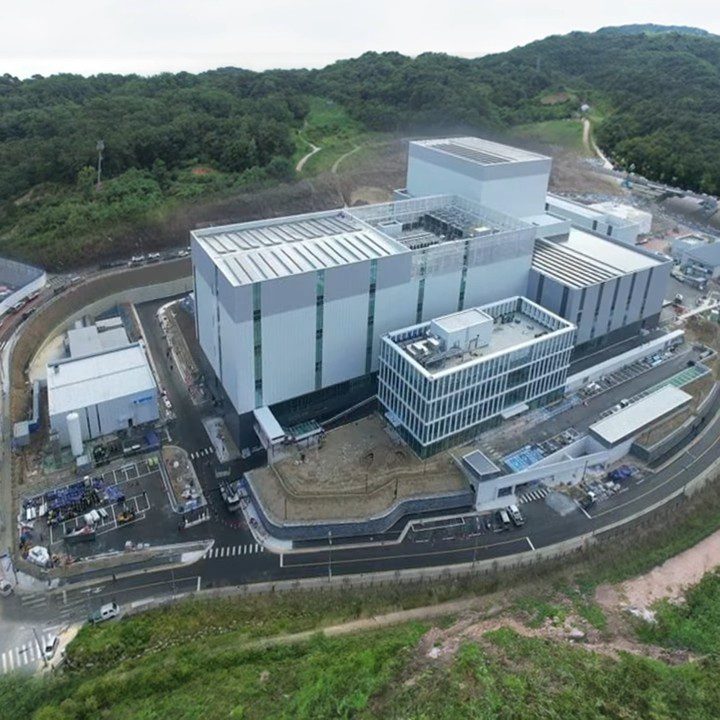
Merck KGaA, Darmstadt, Germany, whose Life Sciences business in the United States and Canada is known as MilliporeSigma, is completing construction of a €300 million ($346.5 million) Bioprocessing Production Center in Daejeon, South Korea, that is set to open by year’s end.
“Since COVID-19, we have implemented a global manufacturing region-for-region strategy where we are building manufacturing capacity in every geography, on every continent. And we continue to do that,” Sebastián Arana, the head of Process Solutions for the Life Science business of Merck KGaA, Darmstadt, Germany, told GEN.
Over the past four to five years, Arana added, Merck KGaA’s Life Sciences business has deployed more than €3 billion ($3.465 billion) in capital expenditures (capex) toward building out capacity to meet customer demand.
In Daejeon, Arana said Merck KGaA aims to be closer to customers in Korea and the rest of the Asia-Pacific region. He cited growth momentum in South Korea, fueled by business activity as well as President Lee Jae Myung committing his government last year to easing regulation of biotech R&D, and catapulting the nation into a top-five biotech industry powerhouse by 2030.
“Korea has intentionally invested in creating a life science ecosystem in the last few years,” Arana said, “with wonderful government support for life science being a critical area to invest in the economy, that’s number one. Korea is an easy country to do business with, so a lot of the Western pharma companies feel very safe working with Korean suppliers. All of the supply chain is very reliable, very, very quick. Plus, they have a history of very good manufacturing capabilities and have now expanded to bioprocessing. They are very flexible and super quick—things that pharma is looking for. They can do technology transfers in months.”
Another portion of capex investment for expansion of manufacturing came in Cork, Ireland, where Merck KGaA last year opened a €150 million ($173.25 million) filtration manufacturing facility in Blarney Business Park. The 3,000-square-meter (32,292-square-foot) cleanroom facility was designed to support global demand for filtration products used in the manufacturing of vaccines and therapies, including monoclonal antibodies, and emerging modalities such as cell and gene therapies.
“More and more, customers are asking for supply chain resiliency, redundancy, to make sure that if something happens with their supply chain, they’re ready to jump from one side to the other. That’s the fundamental strategy we’re executing,” Arana said. “Ideally, they want the closest site for them, but also, we try to have a second or even a third site qualified in case something happens.”
Another factor driving increased business for Merck KGaA is ongoing reshoring efforts by U.S.-based biopharmas that are shifting more production to the United States, whether to meet growing Stateside customer demand, or to avoid tariffs from the administration of President Donald J. Trump, or both.
“We see some good traction in our U.S. business with customers feeling pretty good about the next two years,” Arana said. “It’s not modality-driven. It’s more just global expansion-driven, and you see some of the large molecules continue to grow and be manufactured in the United States. And on top of that, you need to think that the biopharma space is growing. So, there’s a natural investment that should come every year just to keep up the global demand.”
Merck KGaA expects that demand to continue to grow: “We see the market growing in the 8 to 10% range in the coming years,” Arana said, citing what he called an extremely healthy market for bioproduction of pipeline molecules by drug developers. “MilliporeSigma is very well positioned to continue to grow above market or in the upper side of the range.”
Samsung Biologics
Samsung Biologics expanded into the United States earlier this year when it completed its $353 million acquisition of a former GlaxoSmithKline (GSK) manufacturing site in Rockville, MD. The Rockville site adds two cGMP plants totaling 60,000 L of drug substance capacity, capable of supporting both clinical and commercial biologics production across multiple manufacturing scales, to Samsung Biologics’ total global capacity, which now stands at 845,000 L.
Samsung Biologics retained the workforce of more than 500 that had worked for GSK, which took over the site when it completed its $3.6 billion acquisition of Human Genome Sciences in 2012.
“The Rockville facility gives us our first U.S. footprint and allows us to move into a strategic area within the United States East Coast that is closer to clients, allowing for some additional flexibility with supply from U.S. soil,” John Gagliardi, sales director, key account management with Samsung Biologics, told GEN in a recent interview. “We also wanted to be in a major life science hub, which we have within the DMV [District of Columbia-Maryland-Virginia] area.”
The region, which brands itself BioHealth Capital Region, ranks No. 3 in GEN’s A-List of “Top 10 U.S. Biopharma Clusters.”
The remainder of Samsung Biologics’ capacity is the 785,000 liters available at its Bio Campus I and II in Songdo, Incheon, South Korea, where the company is headquartered. Within Bio Campus II, Samsung Biologics will be collaborating with Lilly Gateway Labs (LGL) to establish an open innovation center, a hub designed to support early-stage and emerging biotechnology companies. The center will have capacity for up to 30 companies to be jointly selected by Lilly and Samsung Biologics, and will occupy a five-story, 125,000-square-foot facility set to be completed in July 2027.
Samsung Biologics has also secured land for BioCampus III, laying the groundwork for future capacity expansion to support next-generation therapies and emerging modalities.
“BioCampus III is meant to house additional complex modalities or new modalities that we would get into outside of mAbs [monoclonal antibodies],” Gagliardi explained. “This is meant for cell and gene therapies or peptides, depending on how the market needs shape up. We will bring that capacity to the market to help as the biopharma industry grows.”
Most recently, on July 19, Samsung Biologics signaled its intent to expand further in the United States, as well as across Europe and India, by announcing plans to acquire publicly traded PolyPeptide Group, a CDMO specializing in the production of peptide-based active pharmaceutical ingredients (APIs), for CHF 1.46 billion (about $1.8 billion).
Samsung Biologics said the purchase of PolyPeptide will enable it to expand its capabilities beyond antibodies and antibody-drug conjugates (ADCs) to include peptide therapeutics, whose fast growth has been fueled by a surge in global demand for obesity treatments and continued expansion of peptide-based therapies into new disease areas.
Headquartered in Baar, Switzerland, PolyPeptide has manufactured APIs for some 70 years and has produced more than 1,000 therapeutic peptides to date.
At CHF44.31 ($54.63) a share, Samsung Biologics’ offer represents a 40% premium to PolyPeptide’s closing price of CHF31.65 ($39.02) on the SIX Swiss Exchange as of April 10, before the company’s acquisition became the subject of market speculation.
Samsung Biologics says its buyout of PolyPeptide is expected to be completed “toward the end of 2026,” subject to customary conditions that include owners of at least 66⅔% of PolyPeptide shares accepting the deal, regulatory approvals, publication of the offer prospectus in accordance with Swiss takeover law, and other conditions.
PolyPeptide’s largest shareholder, representing approximately 55.65% of outstanding shares (excluding treasury shares), supports the deal through an irrevocable tender offer, while the company’s independent and non-conflicted board members have unanimously endorsed the planned acquisition.
Thermo Fisher Scientific
Thermo Fisher Scientific says its two-year-old Accelerator™ Drug Development platform, a suite of expanded contract research organization (CRO) and CDMO services, has attracted customers seeking an end-to-end partner for services ranging from drug substance development and manufacturing, no matter the modality, to packaging, labeling, distribution, and carrying out clinical trials through the company’s Clinical Research group.
“All of these services within the same company help reduce the time and complexity and bring all the things required for a robust CMC package that our sponsors would then submit for approval and get these effective medicines to patients faster,” Anil Kane, PhD, executive director, global head of technical and scientific affairs at Thermo Fisher Scientific, told GEN.
The company enhanced its ability to glean insights from clinical trial data in March, when it completed its acquisition of Clario Holdings, a provider of endpoint data solutions for clinical trials, for $8.875 billion cash, plus potential additional milestone and other payments.
Thermo Fisher launched Accelerator in 2024, three years after acquiring the CRO PPD for $17.4 billion, and seven years after expanding into the CDMO market by buying Patheon for $7.2 billion. At its Investor Day in May, Mike Shafer, Thermo Fisher’s executive vice president and president of biopharma services, offered examples of how two undisclosed customers benefited from Accelerator.
For a large U.S.-based biopharma seeking a fast commercial launch for its respiratory drug candidate for competitive reasons. Thermo Fisher ramped up a Phase III trial by activating over 160 sites in less than eight weeks, reducing enrollment time and the dosage timeline by more than 50%. The other was a South Korean drug developer that saved 12 months of activity by using Accelerator to eliminate bottlenecks that included formulation issues, trial design issues, and regulatory alignment requirements.
“We took something that was delayed to accelerating it by almost a year,” Shafer said.
In April, Thermo Fisher opened its flagship U.S. Bioprocess Design Center (BDC) at the company’s Plainville, MA, site, expanding the facility to support customers in developing and scaling biologics. The new center brings together advanced bioproduction capabilities and hands-on collaboration, with the aim of helping customers accelerate process development and bring therapies to patients faster.
“Our customers have been asking about opportunities to develop on a small scale, within a U.S. site,” Kane said. “Our Plainville site was ideally located for our customers based in North America to perform experimentation in the development center. We also have sterile fill-finish capability at the Plainville site. By combining the capabilities of bioprocessing as well as sterile fill-finish, our customers could develop their molecule and the product, then decide the next steps of a clinical product that they can take to Phase I and beyond.”
Thermo Fisher agreed in January to integrate into its lab instruments the AI technology of Nvidia, with the aim of developing intelligent and increasingly autonomous laboratories. The Nvidia announcement came three months after Thermo Fisher agreed to embed OpenAI application programming interfaces into areas ranging from product development, service delivery, customer engagement, and operational efficiency.
“We have applied AI tools in quality management, quality operations, and manufacturing. The idea here is to bring efficiencies and reduce that turnaround time of quality deviations, CAPA [Corrective and Preventive Action] management, to bring efficiencies in planning, scheduling of operations, and reduce the downtime of equipment,” Kane said.
Thermo Fisher has yet to publicly quantify the savings in time and cost from AI applications, though it says it has seen promising results: “We will continue to monitor those and quantify those as we generate more case studies, as we generate more data, because this is certainly of importance to us and our partners.”