
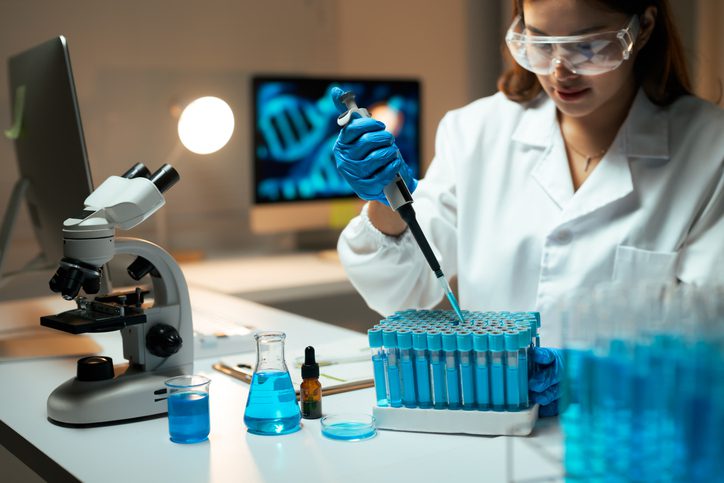
The biopharma industry is emerging from one of the sharpest boom-and-bust cycles in its history. Following a sharp decline in biotech venture funding (2025 deal counts down by two-thirds since 2021, according to Crunchbase) and rising lab vacancies (over 50% in Seattle, according to HughesMarino), the industry is now rebounding.
American biotech hubs like Boston, Seattle, and San Diego are starting to wake up again. But will they be able to learn from the lessons of the recent past? For many biopharma industry stakeholders, the post-COVID downturn provides a truly constructive opportunity: a forced reset of how biotech companies are built, and an opportunity to build them with an eye towards the future.
How we got here
Simply put, over the past 25 years, biopharma’s business model grew unsustainable.
The headline numbers tell the story. In Deloitte’s annual analysis of biopharma R&D productivity, the industry’s internal rate of return (IRR, a common measure of investment profitability) from drug discovery fell to just 1.2% in 2022 as prices soared and sales diminished. R&D productivity recovered somewhat in 2024 (5.9%), but this is still far below the industry’s average cost of capital (>11%), especially given rising interest rates.
The dismal data echoes the infamous “Eroom’s Law” (Moore’s Law backward)—the observation that, unlike the famously improving productivity of microchips, the number of drug approvals per billion dollars invested has been declining for at least 30 years.
When incorporating the cost of drug development failures and capital costs, a two-decade analysis in the Journal of the American Medical Association showed that the total cost of drug development rose from $172 million (in 2018 dollars) to $879 million. The need to effectively control costs was listed as paramount amidst further barriers to getting drugs to market.
Academics debate the reasons for Eroom’s law, but the Baumol effect is likely a key part of the story. Named after economist William J. Baumol, emerged in the 1960s to explain why prices rise in some areas of the economy (especially services) and fall in others (especially manufacturing). Briefly summarized, costs generally to rise faster than inflation in labor-intensive sectors—ones that experience lower productivity growth.
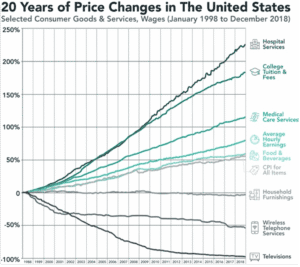
One classic example is a live performance of a string quartet: it takes just as many labor hours to perform today as 300 years ago. By contrast, manufactured goods like television sets grow cheaper every year. As the Baumol effect predicts, between 1998 and 2018, services became more expensive while many manufactured goods became cheaper. And few activities in the economy are more labor intensive than clinical-stage drug development.
The COVID-19 pandemic dramatically amplified those pressures. Predictably, when a wall of public research money (Operation Warp Speed and other programs) rammed into the hard realities of biomedical research, scarcity ensued. In many cases supply was simply unavailable at any price. Even mundane items like pipette tips—became scarce.
To be sure, 2021 was experienced by most in biotech as a boom time—low interest rates ensured plenty of capital was available to meet biotech payrolls. But this capital also meant a lack of incentives to control spending, resulting in spiraling costs and short-term decision-making. Boom times breed bloat and complacency, and we’re living through the aftermath.
Masking the malaise
For a time, however, these warning signs were easy to ignore due to the existence of two counter-trends: declining interest rates and increasing drug prices.
As interest rates decline, the value of any capital asset increases—it works the same for single-family homes and drug development programs. Moreover, biopharma is unusually sensitive to interest rates, given their long development timelines and heavy upfront costs. Steadily declining interest rates therefore created an appearance that ever‑rising expenditures were sustainable.
A second counter-trend unfolded on the revenue side, as big pharma explored the upper limits of what American taxpayers and insurance policyholders would tolerate. When Gilead priced Harvoni at $84,000 in 2014, it sparked an outrage, despite solid health economics justifications; ten years later, six-figure pricing was commonplace. The high water mark of this phenomenon was surely the 2017 conviction of “pharma bro” Martin Shkreli, who had become a household name for buying and price-jacking the ultra-rare disease drug Daraprim from $15 to $750 overnight.
In short, it was interest rates and pricing power, not innovation, that arguably carried industry financials forward through the 2010s—masking the structural decline in efficiency and encouraging capital allocation decisions that could not withstand tighter pricing or financing conditions.
The tide goes out in a perfect storm
These counter trends that had been masking declining productivity came to an abrupt halt in 2022. As Warren Buffett famously quipped about financial bubbles, “Only when the tide goes out do you discover who’s been swimming naked.”
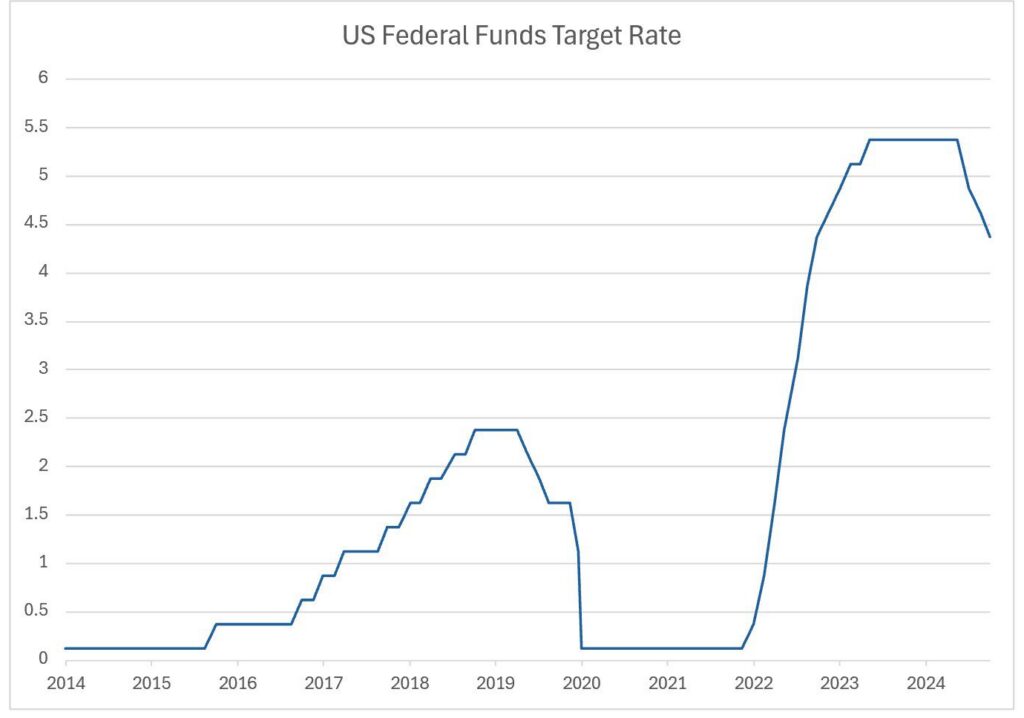
First, the Federal Reserve began the fastest series of interest rate hikes in four decades in response to surging post-pandemic inflation.
Meanwhile, U.S. drug pricing tolerance hit its political limits, culminating in the passage of the Inflation Reduction Act in August 2022, which introduced government price controls on biopharmaceuticals for the first time in the U.S. These pressures have continued, with President Trump continuing to pressure drug companies to lower prices.
As if that weren’t enough, drug development costs were also spiking. During the boom years, more and more late-stage clinical development migrated to the United States, colliding with a relatively inelastic supply of trial sites, specialized labor, GMP manufacturing capacity, and experienced managers. The result was predictable: costs exploded. And the resulting downturn affected everything from venture funding to lab vacancies.
This downturn has understandably been painful for many due to steady industry layoffs. Layoffs in early 2026 have so far exceeded the comparable prior year period, despite hopes of a turnaround. And despite recent gains in public biotech stock indices, venture capital fundraising—the lifeblood of the biotech industry—hit an eight-year low in 2025.
But history suggests that periods like this often precede fundamental reinvention. The reinvention of the technology sector, driven by cloud computing and mobile broadband led to lower costs, and durable, scalable innovation that reshaped the global economy. Biotech now stands at a comparable inflection point. The old model was viable only under extraordinary macroeconomic conditions for a limited window of time. Instead of waiting for them to return, the industry has an opportunity to evolve.
But glimpses of a new, even more value-accretive future are already apparent, and changes are apparent on both sides of the supply and demand equation.
Start with supply: signs of regeneration are already visible, even in the absence of significant interest rate cuts. The collapse in demand for lab space and equipment has sharply reduced barriers to entry.
More fundamentally, emerging technologies like lab automation and generative AI are promising to revolutionize workflows.
Regulatory innovation in Australia, the U.K. and—above all—China, is eroding clinical development costs so rapidly that even the FDA is talking about serious reforms to accelerate innovation.
The success of Ozempic and its GLP-1 competitors shows the powerful appeal of mass-market drugs priced accessibly to the global middle class and for preventing disease—investment themes that defy the conventional wisdom of the pre-COVID era, with its strong bias for specialty-pharma and orphan-disease drugs with niche markets and ultra-high prices.
With newly opened minds—and newly affordable drug-development infrastructure—a new world stands waiting, at least for those with the ambition and cunning to scale and price their products commensurate with global demand.
In sum, the winning strategies for the next wave of biotech—Biotech 2.0—are probably staring us in the face. Just like the rise of cloud computing and mobile were obvious to certain tech entrepreneurs amid the carnage of the dot-com bubble burst, the seeds of the next wave of innovation are quietly germinating right now in the U.S. Some of the most important opportunities, especially for products that can deliver better health outcomes at lower cost, are simply waiting for an opportunity in the marketplace.
As biotech markets finish working through the messy process of creative destruction, we must remain alive to the amazing possibilities it creates for innovators—newcomers, no longer crowded out by old ways of thinking.
Brian Finrow is co-founder and CEO of Lumen Bioscience, a clinical-stage biotechnology company in Seattle. Kevin Klowden works as a global economist and strategist, and a fellow at the Milken Institute, an economic think tank.