
Sponsored content brought to you by

Life sciences has never had more ways to measure biology. But according to Karl Bradshaw, PhD, Chief Business Officer at Metabolon, the next era of discovery will be defined less by how much data researchers generate and more by how effectively they connect it to biological function and phenotype.
Q: What do you see as the biggest shift happening in life sciences?
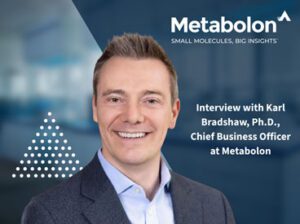 Karl Bradshaw: Biological analysis needs to become more integrated.
Life sciences has become extraordinarily good at generating molecular data. The challenge now is connecting those measurements to understand biological function and phenotype.
That’s why multiomics is becoming so important. Biology doesn’t operate in separate omics layers, so we shouldn’t expect to understand it by studying them independently.
One way to think about this is through the central dogma of molecular biology. Genomics describes the blueprint. Transcriptomics and proteomics show how that information is transcribed and translated, while metabolomics captures the resulting biochemistry close to phenotype. Connecting the blueprint with biochemical phenotype can generate testable hypotheses and help prioritize proteins and pathways for mechanistic study.
Metabolites are influenced not only by genetics and protein activity, but by disease, treatment, diet, lifestyle, environmental exposure and the microbiome. Metabolomics therefore provides a dynamic and highly orthogonal view of biology.
No individual omic can resolve biology alone. Multiomics combines complementary measurements to connect biological variation with mechanisms, biomarkers and outcomes that matter.
Q: What needs to happen for multiomics to become more routine?
Bradshaw: Sophisticated science needs to become increasingly distributed.
We’ve seen this with genomics. Capabilities once concentrated in specialist centers have become standardized technologies deployed broadly. But distributing technology is different from distributing capability.
Putting an instrument or kit into another laboratory is straightforward. Making the expertise behind it transferable is harder. Methods, quality systems, reference knowledge, data processing and interpretation all have to travel with the technology.
This is particularly important in metabolomics, where differences in equipment, reagents, protocols and analysis make inter-laboratory standardization challenging.
That’s a major reason we developed the Metabolon Verus™ Metabolomics Profiling Kit. The question wasn’t simply how to create another kit, but how much of Metabolon’s capability can we put into another scientist’s laboratory?
Verus combines standardized methods, system suitability testing, quality control, automated processing, metabolite identification and bioinformatics in a workflow that laboratories with compatible LC-MS systems can operate themselves. This allows metabolomics to be designed into multiomics studies from the outset, with data comparable across instruments, operators, studies and sites.
Q: What is the third major shift you see happening?
Bradshaw: Molecular data needs to be converted into biological understanding.
Researchers don’t simply want more molecular signals. They want to know whether those signals explain a disease mechanism, predict treatment response, identify a biomarker or point toward the next experiment.
But meaningful interpretation starts with high-quality data. A mass spectrometer can generate enormous amounts of information, but the value comes from producing reproducible measurements, reliably identifying the underlying biochemistry and placing those findings in biological context.
That’s why Metabolon has invested not only in data quality, but also in the infrastructure and biological knowledge around it. Our Integrated Bioinformatics Platform (IBP) allows researchers to explore biological pathways and integrate metabolomics with metagenomic, transcriptomic, proteomic, clinical and other information.
By combining standardized, high-quality data with biological knowledge and computational tools, we can shorten the distance between a molecular signal and actionable biological insight. Metabolomics provides a particularly useful functional anchor within that multiomics landscape, helping connect upstream molecular changes with downstream phenotype and ultimately enabling better scientific decisions.
Q: Where does all of this lead?
Bradshaw: I think the future of biology will be more integrated, more distributed and more interpretable.
For Metabolon, these are parts of the same strategy: connecting molecular layers through multiomics, bringing standardized quality metabolomics closer to where science happens through Metabolon Verus, and translating complex data into biological understanding through IBP.
The next frontier isn’t simply generating more biological data. It’s resolving biology by connecting upstream molecular information to the biochemistry and phenotype that ultimately matter.

Discover how the Metabolon Verus™ Metabolomics Profiling Kit can bring standardized, scalable metabolomics into your laboratory at metabolon.com/contact-us.