

Barring something cataclysmic over the next two months, it’s fair to say 2026 has been the year biotech stocks have shaken off the post-COVID doldrums. The largest electronic transfer fund by total assets, the $11 billion iShares Biotechnology ETF (Nasdaq: IBB) soared 34% over the 12 months ending Friday, from $154.58 to $207.74, while the second-largest ETF, the $10.6 billion State Street SPDR S&P Biotech ETF (NYSE Arca: XBI), leaped 39% from $107.56 to $149.54.
That bounceback helps explain the surge in initial public offerings (IPOs) this year vs. 2025–27 offerings totaling $7.776 billion, up a sizzling 573% from $1.155 billion in 11 offerings in all of 2025. During the third quarter, nine IPOs totaling $2.4 billion reached Wall Street, the largest number in five years, according to investment bank Locust Walk.
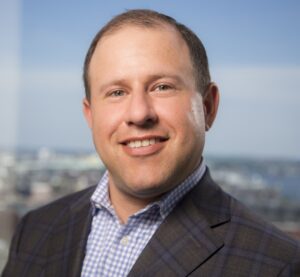
“Yes, we’ve absolutely had a comeback year,” declared Geoff Meyerson, CEO and co-founder of the investment bank Locust Walk. He is also co-founder and CEO of Banyan BioInnovations, an investment firm launched in May to nurture startups by identifying best-in-class or first-in-class clinical-stage assets, forming new companies, or “NewCos,” around them, then providing experienced, centralized support to help them accelerate drug development.
In its recently released 2026 Q3 Market Conditions Report, Locust Walk tracked measures showing growing strength yet continuing challenges for biotech companies during the third quarter:
- Global licensing deals fell to a two-year low of about $48 billion in 41 transactions, from $71.5 billion in 43 transactions during Q2, with the average deal declining to $1.171 billion from $1.662 billion as deals focused more on clinical-stage assets than milestone-heavy discovery/preclinical assets.
- China leads in licensing, accounting for 58% of 2026 value through Q3, up from 48% a year ago, while the United States placed second at 26%. Europe and the United Kingdom slipped to 8%.
- Mergers and acquisitions (M&A) totaled $42.1 billion in 30 transactions, down from a three-year high of $80.7 billion in 35 transactions during Q2. However, total M&A value of $173 billion during Q1–Q3 2026 is already larger than all of 2025.
- PIPE (private investment in public equity) activity grew to $3.808 billion across 14 deals, well over the $603 million of Q2 and $1.151 billion of Q3 2025.
Meyerson addressed the growth of U.S.-Chinese licensing/collaboration deals, the recent growth of IPOs, and the still-chilly climate for startups seeking financing in a recent interview with GEN Edge (edited for length and clarity).
GEN Edge: Public stock markets and private VC markets have shown strength this year, yet we’re seeing plenty of companies avoid them through licensing and collaboration deals, many reaching multiple billions of dollars. Why have licensing-collaboration deals continued to grow despite improving markets?
Geoff Meyerson: It’s a good question. It’s a complicated answer. In the United States, most licensing deals are early-stage discovery and preclinical. It’s rare to do a clinical stage license in the United States, because typically, if you want to get access to U.S. rights as a pharma company, you have to buy the company. In the United States, companies won’t do a license unless it’s a non-core asset. That’s why the M&A statistics show that 91% of total deal value was for U.S.-headquartered companies. The difference, though, is where global licensing deals are derived from: 58% of the total value is coming from China, compared to 26% from the United States.
GEN Edge: Why?
Meyerson: Because for Chinese companies, the Hong Kong markets have effectively shut down. That was a very popular route last year to raise capital. Now, because of red chip and other policies, it’s becoming significantly harder to raise capital in Hong Kong, and a lot of Chinese companies are in line, and the government makes the decision as to whether or not a company can go public.
If you also look at the M&A statistics out of China, approximately 1% of the total deal value is from M&A. If you can’t get liquidity as an investor via going public, and you can’t get an exit via M&A, how else can you either support your company or potentially return capital to the shareholders? The only other option that I’m aware of is licensing. The licensing deals have become the lifeblood and the source of revenue or capital for Chinese companies. That’s why that trend is so material.
In many cases, you can even return the capital to your investors from a license, which in the United States would be double taxed, highly inefficient; that’s why you don’t see a lot of that happening in the United States. The difference also is that the upfronts in China are typically lower as a percentage of the total deal value compared to the United States, because in China, optics matter more. In the United States, the share of the expected net present value matters more. The Chinese companies don’t value the royalties as much. They value very large milestones that in many cases will never be achieved, so that inflates the total deal value number, and that’s one of the reasons why the number is so skewed in China’s favor.
GEN Edge: How concerned are you about Washington, both the Trump administration and Congress, tightening the rules for U.S.-Chinese collaborations?
Meyerson: It’s an interesting question and interesting timing for it, because [on October 16], the Chinese government made a major proclamation about not being able to transfer certain technology platforms outside of China. There’s just as much, if not more, risk in the actions of the Chinese government compared to the U.S. government. In China, one-party rule can make a decision, and it happens. In the United States, you need Congress, you need legislation. Yes, there could be executive orders, but it’s not the same force and permanence. So, there’s definitely geopolitical risk.
My instinct is that it’s not going to be something that is going to be shut down, ever. There will always be a way around it. I’m not going to cover that here, but all kinds of strategies can be deployed to minimize some of the regulatory barriers. Undoubtedly, it’s going to get harder before it gets easier, and it’s going to be driven by both governments, not just the United States.
GEN Edge: What effect has the growth in U.S.-Chinese licensing collaborations had on the market and public company stocks?
Meyerson: I think the U.S. companies that don’t know their competitive set out of China run the risk of having their technology being surpassed from a data perspective. And what’s changed is a lot of U.S. companies have decided not to publish their early-stage pipeline, they’re not publishing patents early. They’re waiting till the last minute, because as soon as that patent is filed, 18 months later it publishes. And the second it publishes, tons of AI bots are circling, figuring that out, and within a week or two, you can design chemical matter or biology around it.
I’m not so sure that market capitalization of the companies is being impacted, but I do think that whenever there’s positive data in the United States, that spurs lots of Chinese companies to push harder. If there’s positive data in China, and that can be read through to the United States, it’s just like any competitor announcing data can impact the stock price of your drug if it’s in the same class, if you haven’t fully differentiated from everyone else. Is it a class effect? Or is it something that is unique to a specific drug? I don’t know if there are direct impacts of all this competition, other than data emerging that, just like any other data coming out in a class and having an impact.
GEN Edge: This year has seen one pause in biotech IPO activity just after the Iran war started, after Generate Biomedicines went public. The markets heated up again in the spring through summer, but have held back in recent weeks. How much of that is investors and others waiting to see what Anthropic does with their IPO, or are there other reasons for the pause lately?
Meyerson: My guess is that the recent swoon with the specialists has really caused an issue. That’s number one. And number two, with the inflation print and the increase in rates on long-dated treasuries, that has a real negative impact on biotech. My instinct is, the markets will recover for the specialists. Who knows how long the rates will be higher on the long-dated bonds, but I think it will be coming back. I don’t think the cycle is over.
GEN Edge: What effect is Anthropic’s IPO having on AI-focused biotech IPOs?
Meyerson: I’m not so sure AI biotech IPOs are actually meaningful, because at the end of the day most drugs—probably more than half of the drugs now were discovered using AI. And 99.5% of all drug spend happens after you have a lead candidate. AI has an impact, but not nearly as much of an impact at that point compared to the early discovery. You’ve still got to put a drug in a human and test it, and that’s not something AI can accelerate. I think AI’s impact on biotech will be certainly felt, but not nearly as much as, obviously, an AI company that’s been transformational.
As it relates to Anthropic, I don’t think that people are in biotech are really focused on that, to be honest. If anything, once Anthropic and OpenAI get public, that will be a lot of capital unlocked at LPs [limited partnerships] that could potentially recycle that into other funds. If anything, I think it’s going to be a huge boon to tech and biotech to have huge values of money, or quantums of capital, being recycled in the ecosystem.
GEN Edge: Is that because Anthropic has made moves in recent months to position itself as a life-sci research and development company?
Meyerson: Yes, they’re going to dabble. But at the end of the day, it’s just like Google, when they started playing life sciences. They’ve got to either be selling tools to those that are developing, or they’ve got to be developing [drugs] themselves. There’s no way around it. You’re doing one or the other. If they’re just selling technology to other people, that’s fine, that’s a SaaS [software-as-a-service] model. If they’re actually developing drugs and putting molecules in patients, they’re not going to have an advantage from an AI perspective. Maybe they can recruit patients a little faster, maybe they can streamline some of the results.
But the reality is, you still need to wait for disease course to play out, and you have to have patients and doctors, and all these things that they have zero experience with. So, they’re going to have to build a pharma company if that’s what they really want to do. I’m not convinced Anthropic or any of these AI companies are going to build pharmas. And if they do, they’ll probably spin it off into a separate company, because it’s not going to grow nearly as fast, it’ll be a drag on their growth. My guess is they’re going to be a drug discovery engine, and they’ll license stuff out, which is fine, but that’s still relatively low value.
GEN Edge: What has been driving PIPE activity, and what companies are more likely to go that route for going public?
Meyerson: The rationale for a PIPE is manyfold. One, there’s been many more reverse mergers that have taken place as a viable normalized way of getting public. If, let’s say, there were 20 IPOs at one point this year, there were 20 reverses, which means, really, 40 companies got public, not 20, but those 20 that got public via reverse all needed a PIPE to complete that. A lot of the PIPEs are from reverse mergers. With quality investors, the aftermarket performance of PIPEs has actually also outperformed that of the IPOs. So, there’s a feeling that you can get a better deal in a PIPE than an IPO or a secondary [offering], and as a result that’s driving people to want to participate.
Then the question is, which companies would want to do a PIPE if you can get a better deal as a secondary? The answer is nobody. Why would you want to do a pipe at a lower price if you can get a better deal as a secondary offering? I think the difference is, for companies where it’s not clear how their data is going to be reacted to by the market, you can lock in the money and not take the price action risk, versus someone who is confident the market’s gonna love the data, you can probably roll the dice, release your data, and then, then do the secondary on the heels of that data release.
We’ve seen times where people came out with data that they thought would be great, and the market hated it, and the stock went down, and then they couldn’t raise capital. So, there is some certainty and some value in doing a PIPE to have the certainty of raising the money, even if it’s potentially at a lower price than you’d have been able to get if you released the data first.
GEN Edge: The report also tracked 46 venture financing deals in North America during the third quarter, down from 55 in Q2 but above the 38 of Q3 2025. The average deal size has grown to $96 million from $83 million in Q2 and $75 million in Q3 2025, with most deals concentrated in Series B, rounds. Doesn’t this confirm what startups have long been complaining about, that they find it hard to raise capital for Series A in earlier rounds?
Meyerson: Yes. I tend to differentiate between Series A, Series B, versus stage of development, because Banyan Bio is starting companies that are Phase II companies through a Series A round. I would think about it’s probably more driven by stage of development than round of financing. Raising money for discovery slash preclinical drugs, drug companies, is really hard. And most of it is going to clinical stage and beyond, which is really saying the market has changed, fundamentally, from 2020, 2021, where if you had a clinical stage drug, you were probably not gonna raise money, because everyone was focused on high-science white space platforms, really sexy iPSCs, and all the different, technologies.
I think what people are saying is that a startup needs to be incubated longer in academia and only spin it out when you have a full development candidate, or later, if not already an IND on file. One of the reasons you’re seeing a lot of NewCos out of China with clinical or late preclinical assets is, you’re able to in-license it for cheaper than what you would have done to develop it yourself on your own. I think that’s the arbitrage out of China that a lot of these investors are seeing. So, yes, it’s a tale of two cities. If you’re doing early discovery high science it’s a very tough spot in the market.
GEN Edge: Will that, in turn, compel some of these companies to try going public instead?
Meyerson: Yes, but the public market wants clinical data also. It doesn’t value preclinical companies very highly, so you can do it, but you’d better be a really great team, with great investors, and a highly promising story in a very interesting area. Ordinarily, that’s going to be very hard to do.
GEN Edge: Where are startups looking as alternatives to traditional VC, as a result?
Meyerson: Family offices have been a big ask, but they’re not stupid either. The more a family office looks like an institutional investor, the more the answer’s going to look like it. So, disease foundations or families that have family members with a particular disease is generally an interesting way of attracting capital. The challenge is, without having them raise their hands, that they have a kid, or a family member, or a parent with that disease, it’s very hard to find them.
That’s where the disease foundations often do a very nice job, and if you partner with them, that can be an interesting approach. Some of the universities are actually investing in their own spinoffs to get to a point where they can create more value. But candidly, we used to play in that space, and we don’t anymore because of the challenge of getting funding.
GEN Edge: On the VC side, biologics’ share of financing value has continued to grow. What biologics are investors drawing toward, and what indications? Is it still cancer, maybe immunology, or has recent success brought neuro on the map?
Meyerson: Cancer and immunology are always going to be the two biggest, as a general rule, but, CNS is definitely doing okay. They’re the big three. I’m kind of surprised that rare disease has not had the same receptivity that it used to have. I think people are focused on larger markets, larger opportunities, because that’s where pharma is focused. I would say probably the most value to be found is in rare disease or smaller opportunities that could still be meaningful, just not mega-blockbuster.
GEN Edge: Looking ahead, what does the fourth quarter hold? Can you offer a preliminary look at what 2027 will hold for the markets?
Meyerson: Obviously, people are on hold until the midterm elections. I think once there’s clarity around what the balance of power is going to be, I think that will help. The hope is that there’ll be some bipartisan legislation aimed at improving the efficiency of the American drug development system. That’s something that I’m certainly supportive of and a champion of.
I’m not someone who’s going to tear down China to build up the United States. I think the United States should compete with China; I think that’s the right approach. I think that there will be, hopefully, some optimism to get some stuff done in ‘27. If that happens, I think the markets will continue apace.
It’s hard to tell: Does the interest rate continue to go up? If it goes up, I think we’re going to see a more challenging biotech ecosystem. Pharma has not gotten out from their patent cliffs. In fact, that’s a feature, not a bug. Every pharma, by definition, has a patent cliff they have to go through. The question is when and how much. So, there’s a built-in buying mechanism.
China’s not going away. There’s risk there with regulation on both sides, but fundamentally, I’m an optimist. I’m bullish on the industry, mid- to long-term. It’s very hard to predict one quarter to the next, for sure. But I don’t think the cycle has already played out. We only really started in earnest doing well a year ago. So, after four years of painful time, I don’t believe that we’re only going to have one year of a window, and then it shuts down again. I think the industry’s too large and too robust for that to happen.