
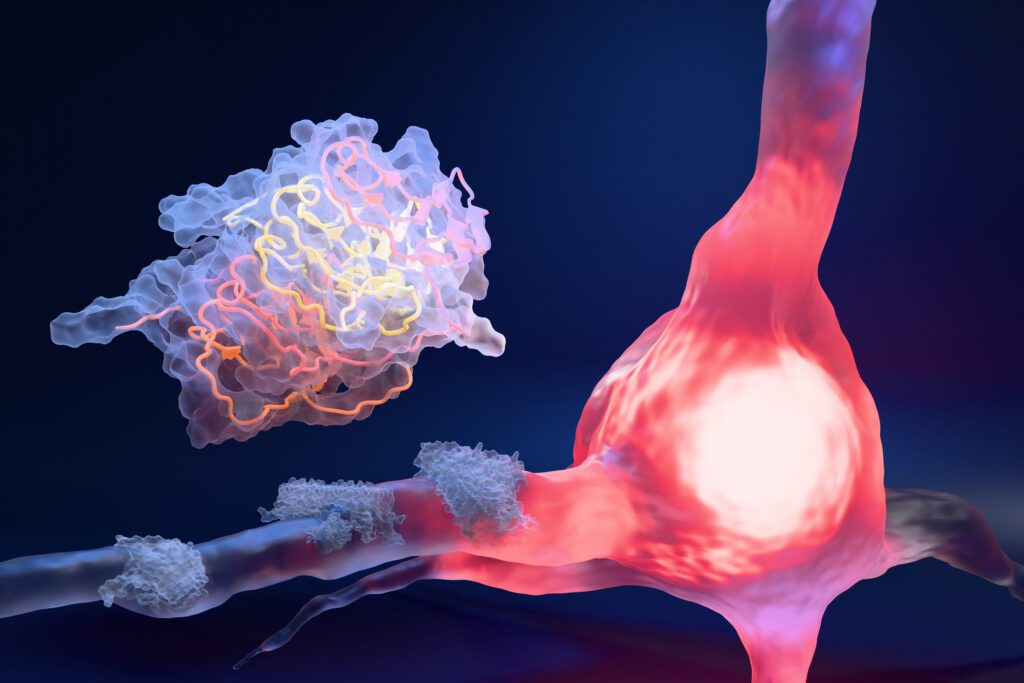
Working in mice, scientists from the Gladstone Institutes, University of California, and elsewhere have created what they claim is the first atlas of neuroprotective proteins that are transported across the blood-brain barrier and into the brain. According to the scientists, the atlas contains 92 proteins so far and their analysis points to potential strategies for treating neurodegenerative conditions. Details are provided in a new Cell paper titled “The blood-brain barrier imports diverse neuroprotective proteins through pathways impaired early in Alzheimer’s disease models.”
The study suggests that the blood-brain barrier is much more than a physical boundary intended solely to protect the brain from toxins. As Andrew Yang, PhD, a Gladstone investigator and one of the authors on the study put it, “we’re finding that it’s an intelligent interface that plucks the right proteins in the blood, often from distant parts of the body and delivers them to the right cell types in the brain.” Importantly, as the paper’s title suggests, the proteins included in the atlas make their way into the brain through pathways that are impaired early on in the development of diseases like Alzheimer’s.
To generate the atlas, Yang and his colleagues developed a method of tracking the specific blood plasma proteins that crossed into the brains of mice. They used protein-labeling chemistry to track proteins from multiple organs such as the liver and kidney without disrupting their biology. Specifically, they developed “a bioorthogonal proteomics strategy, an in vivo click-enrichment screen of labeled plasma proteins entering the brain” and used it to systematically map the blood-brain barrier “transportome,” according to the paper. The approach was benchmarked against a commonly used biotin labeling approach and was shown to consistently produce “stronger signals in plasma and brain vessels” as well as to enable “robust detection of plasma proteins in neurons, astrocytes, and microglia.”
The scientists used the method to tag various mouse blood proteins before injecting them back into the bloodstream. They examined brain tissue to see which labeled proteins successfully crossed the barrier. Of the 861 proteins that the scientists tracked in this way, they found that 92 crossed into the brain. Most were proteins produced primarily in the liver but also in adipose tissue and the intestine. Once there, the proteins were directed to specific types of brain cells to perform specialized functions.
An example is the liver protein apolipoprotein AI or (APOA1) that once in the brain activates a pathway needed to maintain healthy astrocyte connections. Studies link its absence to a greater risk of developing Alzheimer’s disease. “We think of blood proteins as messengers carrying signals from distant body parts, and the cells of the blood-brain barrier import only the ones the brain really needs,” said Haoyue Zhou, PhD, a postdoctoral scholar in Yang’s lab and first author of the paper.
A key part of the study was exploring what happens to protein delivery in Alzheimer’s. As the disease progresses, the blood-brain barrier breaks down allowing harmful proteins to leak into the brain. Using their protein-labeling method, Yang’s team discovered another problem. They found that even before the barrier breaks down, it stops importing protective proteins like APOA1 into the brain. Loss of the protein erodes neuronal connections, which contributes to behavioral changes and other early signs of the disease.
Conceivably, increasing the supply of APOA1 to the brain could help counter the emergence of Alzheimer’s symptoms. To discover whether this might be possible, the scientists tracked proteins in mouse models engineered to produce extra APOA1 in the liver. And indeed they found that as more APOA1 entered the brain, the mice showed fewer signs of the disease. These findings suggest that “Alzheimer’s disease may not start entirely inside the brain” but “when the brain’s supply line from the body is severed,” Yang noted. “If that’s right, we may be able to fight this disease from outside the brain, by restoring what the brain has lost.”
Boosting production of beneficial proteins like APOA1 to ensure the brain has a sufficient supply is one possible treatment strategy. Another option is harnessing the brain’s natural “ZIP code” system to deliver therapies directly to specific types of brain cells. A third option that Yang and his colleagues are currently exploring is harnessing the blood-brain barrier’s transport machinery to help drugs reach the brain more efficiently.