
Glucagon-like peptide 1 (GLP-1) and glucose-dependent insulinotropic polypeptide (GIP) receptor agonists have revolutionized the treatment of type 2 diabetes (T2D). None of these blockbuster drugs, which have generated billions for their developers, are indicated for type 1 diabetes (T1D)—though six professional groups earlier this year published a consensus statement designed to facilitate their safe use in managing T1D.
New Orleans-based Diasome says T1D treatment represents an unmet need that it is looking to address through its next-generation formulation of insulin targeting hepatocytes—which regulate how the body stores nutrients and controls whole-body blood glucose and fat metabolism—by using and clearing insulin, GLP-1, and serotonin as they enter the liver through the portal vein.
Diasome’s formulation comes from its own hepatocyte-directed vesicle (HDV™) lipid nanoparticle platform, designed to deliver peptides, proteins, and hormones—including insulin—to the portal-hepatic region with precision.
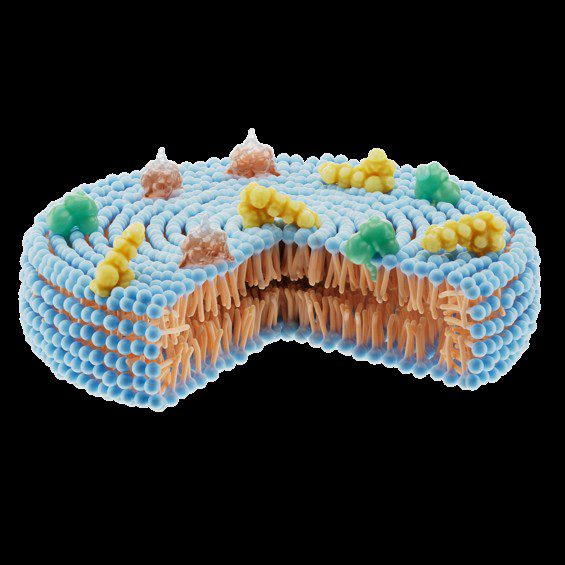
HDV is a phospholipid bilayer bicelle that is designed to bind standard insulin lispro and preferentially direct it to hepatocyte receptors, enhancing cellular uptake and bioavailability by mimicking natural cell membranes. Its net negative surface charge enables electrostatic binding with positively charged proteins and peptides.
Biotin-PE is embedded in HDV’s surface membrane, enabling what Diasome says is efficient targeting to hepatocytes, where the sodium-dependent multivitamin transporter is most highly expressed, facilitating selective hepatic uptake.
In binding up to 100 proteins and peptides onto each disc, concentrating and directing biologics and drug therapies through the portal-hepatic highway, HDV is intended to address the difficulty of insulin, GLP-1, or other molecules traveling to the liver when injected subcutaneously, due to the large number of receptors in peripheral tissue such as fat cells and muscle cells.

“Either subcutaneously or via oral administration, we’re able to preferentially deliver enough of those payloads into the liver and the portal vein that feeds the liver to basically mimic the endogenous release of those materials,” Robert Geho, Diasome’s co-founder and CEO, told GEN.
“Diasome is taking these commonly used APIs [active pharmaceutical ingredients] and adding very elegant chemistry to them in kind of an API-agnostic fashion and changing the biodistribution in an important way to enable the liver, especially, to just basically turn back on in response to those targeted molecules.”
Pivotal studies
Diasome is preparing to advance its HDV-insulin formulation into pivotal studies after generating positive Phase IIb data earlier this year and presenting it at two conferences earlier this fall.
“We’re working hard right now to finalize our Phase III planning. It’s a combination of finalizing the protocol, doing the power calculations, figuring out how many studies need to be run, choosing the insulin that we’re going to use, and then at some point fairly soon, get in front of the FDA and have a discussion about our pivotal program. We are very much dialed in on all of that Phase III preparation,” said Geho, himself a T1D patient.
Diasome is far from alone in developing treatments for T1D, an historically tough-to-drug indication; the primary treatment remains insulin, along with daily management (checking blood sugar and counting carbohydrates), and adjunctive therapies.
By year’s end, Lexicon Pharmaceuticals hopes to resubmit a new drug application (NDA) for sotagliflozin in T1D, depending on positive data from the Phase III STENO1 trial (NCT06082063) sponsored by the Steno Diabetes Center Copenhagen.
Sotagliflozin is an oral inhibitor of sodium-glucose co-transporters 1 and 2 (SGLT1 and SGLT2) marketed for heart failure as Inpefa®. Lexicon’s effort to expand the label to T1D (under the name Zynquista) was stymied in 2024 when the FDA rejected the company’s NDA for the drug as an add-on therapy to insulin for adults with T1D and chronic kidney disease (CKD). Lexicon responded by launching STENO1 and two other investigator-initiated trials, SUGARNSALT (Joslin Diabetes Center; NCT06217302) and SOPHIST (University of Dundee, NCT06435156).
Another SGLT2 inhibitor, dapagliflozin, was rejected by the FDA in 2019 as an adjunct treatment to insulin in adults with T1D. Since then, researchers have studied it in combinations for T1D, such as with pioglitazone, marketed by Takeda Pharmaceutical as Actos® (NCT03878459) and in combination with insulin and Novo Nordisk’s semaglutide marketed for obesity as Wegovy® and for T2D as Ozempic® (NCT03899402). Dapagliflozin is marketed by AstraZeneca as Farxiga® for T2D and specific forms of heart and kidney disease.
Expanding landscape
This year has seen better news for T1D drugs: The T1D landscape expanded in June when the FDA approved a broader label for Sanofi’s Tzield® (teplizumab) widening use of the CD3-directed monoclonal antibody to children aged 1 year and older with Stage 2 T1D. Tzield was initially approved in 2022 for children ages 8 and older, as the first disease-modifying therapy in autoimmune T1D. A year later, Sanofi inherited Tzield by acquiring its original developer Provention Bio for $2.9 billion.
Another T1D candidate fared worse in July when Roche ended development of acmopatide (CT-868), a once-daily dual GLP-1/GIP receptor agonist for T1D with obesity—despite generating positive Phase II data a month earlier showing the drug improved blood glucose management and reduced body weight. Roche instead opted to focus its T1D development effort on enicepatide (CT-388), a once-weekly subcutaneous injectable which CEO Thomas Schinecker told analysts held greater potential for development in multiple indications.
Roche inherited both drugs when it acquired Carmot Therapeutics for up-to-$3.1 billion in a deal completed in 2024.
The T1D treatment landscape may be shaken as early as November, when Eli Lilly—whose GIP/GLP-1 receptor agonist tirzepatide is marketed for diabetes as Mounjaro®—is expected to read out data from two Phase III trials comparing the drug to placebo in adults with T1D and obesity or overweight—the 49-week, 905-patient SURPASS-T1D-1 trial (NCT06914895), and the 20-month, 465-patient SURPASS-T1D-2 trial (NCT06962280).
A T1D indication would likely add billions in new sales to Mounjaro, which racked up $18.605 billion in revenue during the first half of 2026—up more than double (106%) from $9.041 billion a year earlier. Lilly is set to report Q3 results on October 29.
Positive case
Researchers from Diasome and partners have made a positive case for HDV-insulin in recent weeks, presenting data from the Phase IIb OPTI-2 trial (NCT06238778) at the 62nd Annual Meeting of the European Association for the Study of Diabetes (EASD), held September 28–October 2, 2026, in Milan.
During OPTI-2, a 25-week double-blind trial, 226 adults with T1D treated with multiple daily injections were randomized 1:1 to bolus insulin with insulin lispro (sold under several generic versions and marketed by Eli Lilly as Humalog®) or Diasome’s hepatic-directed insulin lispro (HDV-L) with continuous glucose monitoring (CGM) for 12 weeks of optimization followed by13 weeks of maintenance therapy.
The data, initially published in June, showed that HDV-L was non-inferior to insulin lispro in reducing A1C. HDV-L was also associated with reductions in clinically meaningful hypoglycemia, including severe hypoglycemia, while preserving glycemic control in people with T1D using multiple daily injections.
“These data support advancement into Phase [III] studies,” the researchers concluded.
Five insulin lispro-treated subjects had severe hypoglycemic events compared to zero with HDV-L (p = 0.0598). And while treatment emergent adverse events (TEAE) were similar between groups, but only one person randomized to HDV-L had serious TEAEs, compared with eight insulin lispro patients. There were no deaths or cases of diabetic ketoacidosis.
A week later at the inaugural Breakthrough T1D Clinical & Research Congress held October 9-11 in Philadelphia, researchers presented both previously published findings from OPTI-2 as well as new data from the trial showing that compared to insulin lispro, HDV-L was associated with a lower exposure-adjusted incidence rate (EAIR) per person-year for level 1 or 2 hypoglycemia, level 2 hypoglycemia, and level 1 hypoglycemia.
“Breakthrough in insulin therapy”
“We reduced hypoglycemia risk substantially in a six-month double-blinded trial versus insulin lispro. We think it’s a breakthrough in insulin therapy,” Geho said. “Hypoglycemia risk is the single biggest rate-limiting challenge to achieving glycemic control in people with insulin-deficient diabetes. If you can fix that, you can actually enable people to take more insulin safely, which will have a big impact on their A1C control.”
Even with advanced pump technologies and CGM technologies, he added, the unmet clinical need on hypoglycemia is substantial.
“If we look at GLP-1, we’re really focused on the data that’s coming out that some 50% of new GLP-1 users discontinue within one year, 85% discontinue within two years. And why is that? The two big issues are cost and side effects,” Geho said.
Both percentages were reported among overweight or obese patients taking GLP-1s. The roughly 50% one-year discontinuation percentage appears in a 2025 study by researchers at the University of Pennsylvania’s Perelman School of Medicine and health data and analytics company Truveta: 46.5% of T2D patients and 64.8% without T2D stopped within a year—though 47.3% of T2D patients and 36.3% of patients without T2D resumed use of GLP-1s within that year.
The 85% percentage comes from an analysis of real-world integrated pharmacy and medical claims data from 16 million commercially insured members that was posted in July 2024 by Prime Therapeutics, a pharmacy benefit manager.
Three months later, Prime spelled out its methodology: 3,046 GLP-1 using members were matched to three control members for a total of 8,343 unique control members identified (306 control members matched to more than one GLP-1 user). The mean age of individuals identified was 46 years, 81% were women and 14% had a prediabetes diagnosis.
“Competitive advantage”
“So, we think that offering a technology that is more physiologic—in other words, we’re changing where these molecules work enough that the body essentially reaches a better balance, settles down from a GI tolerability point of view—that would be a big competitive advantage,” Geho added.
Geho established Diasome in 2005 with his father W. Blair Geho, MD, PhD. The elder Geho pursued his PhD in pharmacology under the tutelage of Earl W. Sutherland, Jr., a Case Western Reserve University researcher who won the 1971 Nobel Prize in Physiology or Medicine “for his discoveries concerning the mechanisms of the action of hormones.”
Specifically, Sutherland demonstrated how signals from one cell to another are conveyed by a messenger, the hormone, while signals within cells are conveyed by other messengers. Around 1960 he showed how cyclic adenosine monophosphate (cAMP) serves as the secondary messenger within the cell.
To date, Diasome has raised approximately $85 million, attracting capital from investors that have included Eli Lilly and the JDRF T1D Fund (since renamed T1D Fund, A Breakthrough T1D Venture™, following the rebranding in 2024 of JDRF, which was founded in 1970 as the Juvenile Diabetes Research Foundation). The company’s last announced financing was the first closing of its Series C round in December 2023; its amount has not been announced but has been reported to be $9.5 million.
“We’re anticipating a Series D financing, so that work is underway,” Robert Geho said. “That’s an active part of our work right now.”
Since its founding, Diasome has grown its workforce to between 20-25, counting both full-time employees and significant consultants.
“In terms of full-time headcount, I am anticipating increasing that by probably 25 or 30% over the next several months,” Geho estimated.