
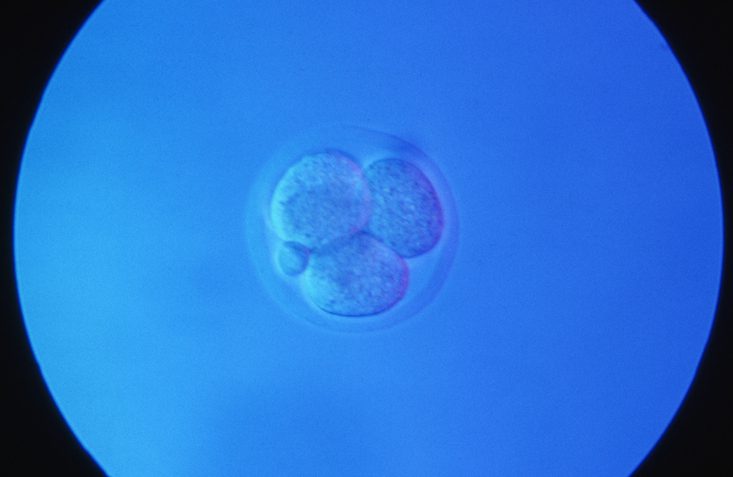
Researchers have used two DNA-recording systems to reconstruct cellular family trees across mouse embryonic development. The companion studies—“A DNA typewriter records the cell lineage history of a mouse, from zygote to late organogenesis,” published in Science, and “Comprehensive lineage tracing maps the landscape of cell fate decisions in mouse embryogenesis,” published in Cell—offer high-resolution views of mammalian development, which has been difficult to track because embryos develop inside the uterus and cannot be continuously observed.
The team from the Science study was led by co-senior authors Jay Shendure, PhD, professor of genome sciences at the University of Washington School of Medicine and a Howard Hughes Medical Institute investigator, and Chengxiang Qiu, PhD, a molecular and systems biologist at Dartmouth College. Their approach centered on DNA Typewriter, a lineage-tracing technology developed by Shendure and Junhong Choi, PhD, that uses a cell’s DNA as a recording medium.
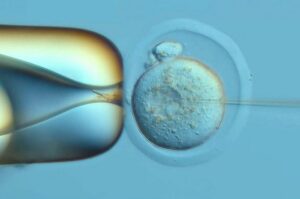
The researchers redesigned the system’s recording “tape” to make its history easier to recover from individual cells, then inserted it into the genome of a fertilized mouse egg. As cells divided, “a burst of editing unequivocally marks the daughters of the first cleavage, which serve as inline replicates,” the authors wrote in the Science paper. Because daughter cells inherited the marks already written before acquiring new ones, shared patterns revealed common ancestry and the order of developmental branching.
“Most biological measurements are based on either live imaging, which is limited by the fact that most animal tissues are not transparent, or genomics, which are destructive and only measure a single timepoint,” Shendure said. “Recording techniques like the ones in these studies enable measurements over time including in settings that we can’t directly visualize.”
The experiment was attempted in 100 fertilized eggs and yielded 10 embryos for examination. One embryo carried the most informative record, allowing the team to trace nearly every profiled cell back to one of the first two cells formed after the fertilized egg divided. Although one founding cell produced more descendants, the two branches generated diverse cell types in nearly equal proportions.
The ordered recording also allowed the researchers to estimate when cell types diverged from shared developmental paths. Blood and retinal cells committed relatively early, whereas cells forming the skin’s outer layer committed later. The results indicate that cell identity is not fixed in a single coordinated step; instead, different lineages become restricted on distinct schedules.
Earlier lineage-tracing approaches often relied on DNA-cutting enzymes that could damage cells, erase previous records, exhaust recording capacity, or leave unordered marks whose chronology had to be inferred. “DNA Typewriter avoids all of this,” said co-first author Haedong Kim, PhD, a postdoctoral scientist in genome sciences at UW Medicine. “It writes without fully severing the DNA, keeps recording relatively steadily, and writes everything in strict order, so we can record cell lineages at much higher resolution for a longer time.”
In the Cell paper, Jonathan Weissman, PhD, and colleagues used a prime-editing system called PEtracer to map lineage dynamics across more than 1.4 million cells from 16 mouse embryos. Together with the DNA Typewriter study in Science, the work demonstrates that mammalian cellular family trees can be reconstructed at unprecedented scale. “It’s really proof of principle that we can do what was done with the roundworm in 1983, but for mammals like you and me,” Weissman said.
The work provides a framework for investigating how normal organs form and where development can go awry. More complete lineage records could help researchers study congenital malformations, neurodevelopmental and genetic disorders, and cancer, as well as guide stem cell engineering. As Shendure explained, “Recording techniques like the ones in these studies enable measurements over time including in settings that we can’t directly visualize.” Scaling the methods across additional embryos and experimental conditions could support more quantitative—and eventually predictive—models of mammalian development.