

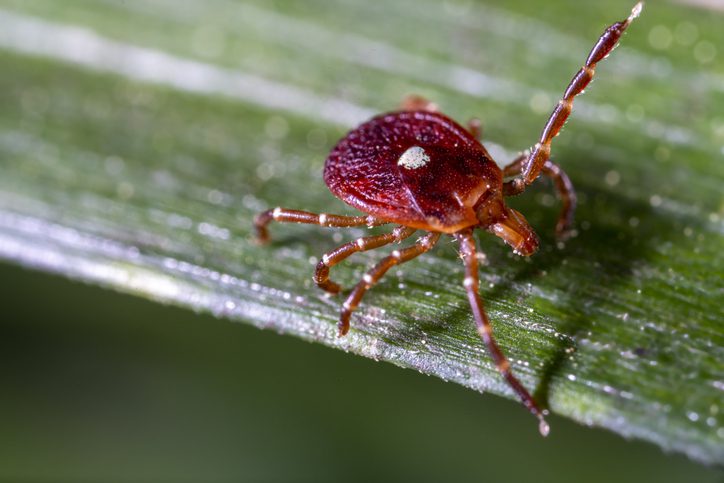
Alpha-gal syndrome (AGS)—also known as red meat allergy—is an allergy transmitted through ticks. Alpha-gal (galactose-α-1,3-galactose) is naturally produced in the bodies of most mammals, but not people. It is also found in the saliva of some ticks and is transferred in a tick bite into a person’s blood, leading to an allergic reaction. Symptoms, which can include hives, gastrointestinal distress, breathing difficulties and, in severe cases, anaphylaxis, occur after people eat red meat or are exposed to other products made from mammals. Unlike many food allergies, reactions often occur several hours after eating, which can make diagnosis difficult.
The number of AGS cases in the U.S. is difficult to determine because AGS is not a nationally notifiable disease. Between 2010 and 2022, there were more than 100,000 suspected cases of AGS but the number could be as many as 450,000. More data and research, notes the CDC, are needed to understand how many people are affected by this condition.
Now, a hospital in Martha’s Vineyard, MA, is leading that effort.
Martha’s Vineyard Hospital has begun recruiting participants for a research study designed to better understand AGS. Researchers will follow up to 300 participants over two years to examine how often AGS develops after tick bites, which factors may increase risk, how the immune system changes over time and how the condition affects patients’ daily lives and health care use.
Led by Jacob Lemieux, MD, PhD, assistant professor at Harvard Medical School and Ellen McMahon, MD, chief of medicine and ambulatory medical director for Martha’s Vineyard Hospital, the study seeks to answer several key questions: who develops AGS after lone star tick exposure, who becomes sensitized without developing symptoms, and what biological or demographic factors may influence risk. Researchers also hope to identify immune, inflammatory and other markers that could help predict who is most likely to develop the condition.
“Alpha-gal syndrome is an emerging health concern in our region, but there are still many unanswered questions about why some people develop the condition after a tick bite while others do not,” said Lemieux. “By following participants over time, we hope to better understand the biological and environmental factors that influence risk and generate information that can help guide future diagnosis, prevention and patient care.”
The study will enroll Martha’s Vineyard residents age 15 and older who live on the island for at least three months each year, including pregnant individuals. Participants will complete an initial visit and periodic follow-up visits that include medical history reviews, blood testing and other assessments.
“One of the challenges of alpha-gal syndrome is that symptoms can be delayed and vary widely from person to person, making the condition difficult to recognize and diagnose,” added McMahon. “This study will help us better understand the patient experience, identify potential warning signs and improve our ability to support individuals and families who may be affected by this increasingly important health issue.”
The study comes at a time of growing concern about AGS on Martha’s Vineyard, with hospital data showing a significant increase in alpha-gal testing over recent years, while local clinicians and biologists have observed growing numbers of lone star ticks and increasing concern about tick-related illnesses. The island’s wildlife population, seasonal population shifts and outdoor environment make it a useful setting to study the condition.
“Martha’s Vineyard is uniquely positioned to contribute to our understanding of alpha-gal syndrome because clinicians here are seeing firsthand how tick-related health concerns are evolving in our community,” said Claire Seguin, DNP, president and COO, Martha’s Vineyard Hospital.

