
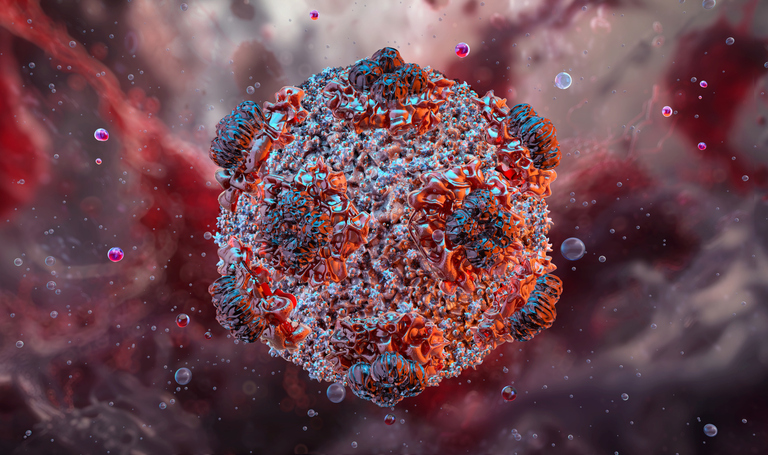
Hantaviruses have a death rate approaching 40% with no vaccines or treatments. These viruses are transmitted from rodents to people and are classified into Old World hantaviruses (OWHs), which cause hemorrhagic fever with renal syndrome (HFRS), and New World hantaviruses (NWHs), which cause the more frequently fatal hantavirus cardiopulmonary syndrome (HCPS).
New findings published in the journal Cell titled, “High-resolution in situ structures of hantavirus glycoprotein tetramers,” describe a first step toward vaccines and antibody therapies for the Andes virus, a hantavirus endemic to the southwestern U.S. and other parts of North and South America. Researchers from the University of Texas (UT) at Austin have produced a high resolution blueprint for a protein complex the Andes virus uses to infect host cells.
The lack of high-resolution structures of the hantavirus glycoprotein tetramer and its lattice organization has limited mechanistic insights into viral assembly and entry. The authors leveraged a virus-like particle (VLP) system to establish a cryo-electron microscopy workflow for lattice-forming viral glycoproteins.
The method enabled the determination of a 2.35 Å resolution structure of the membrane-embedded Andes virus (ANDV) glycoprotein tetramer as well as the structures of dimers of tetramers and a complex with an antibody for therapeutic applications.
“Now that we have a better blueprint of what the virus looks like, we can design effective vaccines and antibody therapies for hantaviruses,” said Jason McLellan, PhD, professor of molecular biosciences at UT Austin and co-corresponding author. Luqiang Guo, PhD, a postdoctoral fellow at UT Austin, is the first author.
The new detailed structural information enabled the researchers to produce a vaccine candidate that, when injected in mice, caused their cells to produce neutralizing antibodies against the Andes virus.
“People will start to apply this method to many other viruses,” McLellan predicted.
For vaccines or antibody therapies to be most effective against a hantavirus, mimicking surface proteins at the pre-infection stage is essential. These latest structures show the Gn-Gc tetramer in a particular state before it has infected a cell. These surface proteins change once they have fused with the cell through the infection process. Looking ahead, the team aims to apply AI to engineer these viral protein complexes with stabilizing mutations as a therapeutic tactic.
In 2024, the NIH identified several families of viruses—including hantaviruses—that had no effective vaccines or treatments, labeling them of special concern for their potential to cause a pandemic. To better prepare for future pandemics, the NIH awarded a series of grants through the ReVAMPP program to develop new tools to combat these viruses, including the grant that established the Provident consortium and enabled this latest study. Simultaneously, McLellan and other Provident researchers are working to address other viruses that health officials have identified as especially dangerous in an outbreak, such as measles and Nipah virus.