
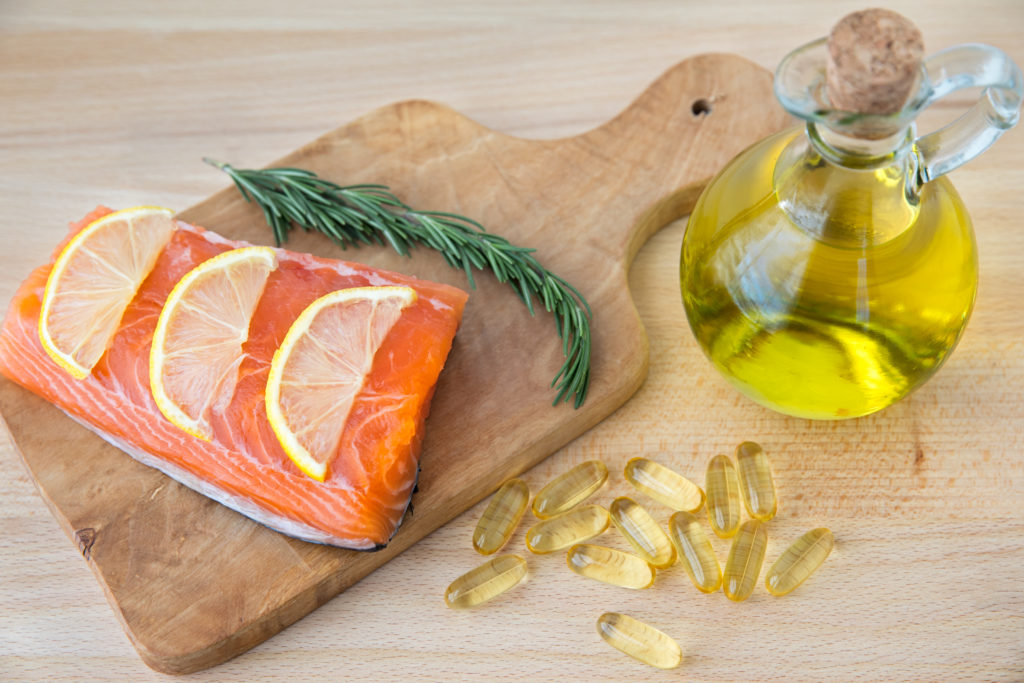
Polyunsaturated fatty acids (PUFAs), and especially some omega PUFAs, are recognized for their myriad health benefits, but their role in the biology of cancer cells and tumor immunity has been less clear. The results of a preclinical study by researchers at Yale University School of Medicine now indicate that some omega fatty acids can restrain the cancer-killing capabilities of natural killer (NK) cells by acting through a receptor, LRP5.
In their paper in Science Signaling, titled “LRP5-dependent transport of polyunsaturated fatty acids serves as an immune checkpoint for natural killer cells,” first author Yi Luan, PhD, and colleagues stated, “Given the widespread promotion of polyunsaturated fatty acids (PUFAs) as beneficial dietary supplements, greater public awareness of their potential unintended effects is warranted.” The authors call for further work to explore the mechanisms that shape the expression of LRP5 in different contexts, which they say could unveil potential therapeutic targets.
PUFAs are essential lipid molecules characterized by multiple double bonds in their hydrocarbon chains, the authors wrote. They are broadly classified into two groups, omega-3 (n-3) and omega-6 (n-6) PUFAs, which are found mostly in fish, nuts, and vegetable oils. They play many essential roles in the body, including by maintaining the fluidity of cell membranes and supporting signaling within cells. “Their uptake and intracellular distribution rely on lipid transporters, which facilitate their availability for metabolic and signaling functions,” the team explained.
PUFAs, especially the omega-3s, have become widely touted for their various health benefits and anti-inflammatory properties. However, PUFAs have a more complex role in tumor biology than generally assumed, as some research indicates they can influence the biology of both tumor cells and anticancer immune cells such as natural killer cells. Research has highlighted the role of n-3 PUFAs in preventing tumor progression, the team noted. “Beyond their direct influence on tumor cells, they also modulate immune cell function within the tumor microenvironment, further emphasizing the complex role of PUFAs in tumor development,” they commented. “However, their specific impact on NK cell biology remains poorly understood.”
For their newly reported study, Luan and colleagues probed how PUFAs shape the biology of natural killer cells, which play a central role in immune surveillance. They knocked out the LRP5 receptor, which acts as the conduit for PUFA transport into natural killer cells, and found that this reduced the intake of PUFAs. However, the loss of LRP5 enhanced the cells’ ability to eliminate colon cancer cells and slowed the growth of tumors in mice.
Feeding wild-type mice a diet free of PUFAs similarly suppressed tumor growth. Additional work showed that PUFAs constrained natural killer cells by suppressing the mTORC1 signaling pathway and glycolysis metabolism. “Mechanistically, LRP5-mediated PUFA transport suppressed mTORC1 signaling and glycolysis in NK cells, a metabolic pathway essential for NK cell cytotoxicity,” they stated. “Thus, our study identified LRP5 as an immune checkpoint that restrains NK cell activity through PUFA transport–dependent suppression of mTORC1 signaling.” They suggest that future studies should further explore the regulatory mechanisms governing LRP5 expression in different contexts, “… potentially revealing therapeutic opportunities.”