
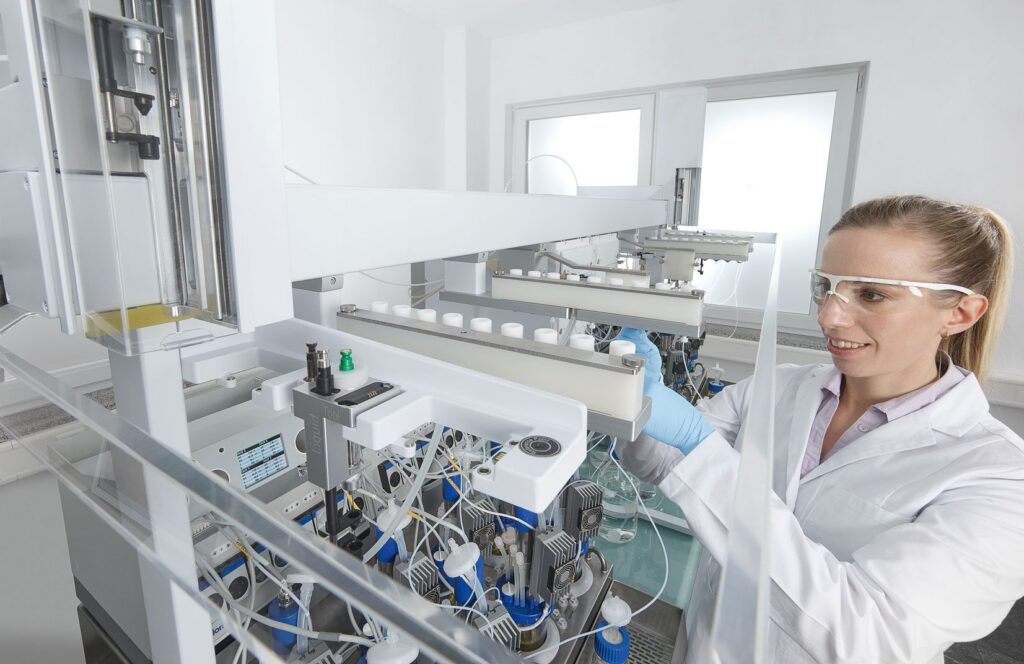
Bioprocesses are inherently complex biological systems that require tight engineering control to maintain healthy operating conditions to ensure consistent productivity and product quality.
An essential part of modern bioprocessing, process analytical technologies (PAT) help address the manufacturing complexity of today’s biological modalities as companies increasingly face pressure to reduce timelines, improve consistency, and make processes easier to scale. PAT is typically associated with monitoring process and quality parameters, but the greater benefit comes from developing closed loops to connect measurement data directly to automation and bioprocess control.
PAT is no longer primarily a regulatory recommendation but rather an operational necessity. Although the value is well understood across bioprocessing, implementation varies. Many companies use PAT in process and characterization as well as for monitoring applications. While basic in-line monitoring is now almost universal standard practice, such as in real-time monitoring and dynamic control of cell cultures, adoption of advanced PAT for monitoring critical quality attributes (CQAs) and complex process parameters is growing at a slower rate.
Tool and infrastructure providers continue to hone product offerings to simplify use while incorporating advanced multiparametric sensors, meet emerging needs, as well as create ecosystems that incorporate advanced technologies such as AI to address the broad needs of users as they continue to adopt PAT in the bioprocess field.
Transforming quality
By measuring real-time CQAs and process parameters during bioprocessing, PAT transform quality into in-line analyses rather than endpoint measurements. Many technologies, including instruments, sensors, controllers, and storage and analysis software, interact in the PAT framework.
Application needs drive the use of technologies and associated measurement approaches. For example, needs vary between microbial and cell cultures. “Implementation depends on the total cost of ownership,” emphasized Simon Wieninger, PhD, head, portfolio and applications bioprocess at Eppendorf. “The more we reduce the cost for automation and analytics, the more widespread PAT will become.”
Eppendorf bioreactors integrate sensors, including those for standard characterizations, for real-time data collection and bioprocess control. “For instance, our gas flow technology offers high precision and a wide range of turndown ratio to control microbial-related processes, advanced cell culture, or CGT processes,” said Wieninger. Any sensor technology built to industry standards like OPC UA can be integrated into the control software via drag and drop.
The company’s digital ecosystem consists of DASware® control SCADA software, which orchestrates the information and control between bioreactors and controllers as well as third-party devices and software. Furthermore, the Bioprocess Autosampler can be connected to the optional BioNsight® cloud-based software connected to the SCADA system for on- and off-site bioprocess monitoring and analysis, and the Nova Analytics BioProfile® FLEX2 to enable script-based inoculation, bolus addition and measurements of the process 24/7 in the digital ecosystem.
“We collect the sample, control the process based on the sample, and store it afterwards for quality documentation,” Wieninger said. “We provide the full loop—the sampling, advanced analytics and sensors combined with AI as more users continue to fully automate their process in closed loops.” For simulation capabilities, the company partners with DataHow, an AI-driven process analytics company in the upstream space.
A strong desire exists to maximize data generation by reducing sensor size, combining measurements, and increasing integration. Importantly, Wieninger related that some processes have physical limitations to scale up. PAT advancements also offer the potential to scale out instead of up by providing comparability data between runs, allowing for risk assessments.
Improving sensors
Bridging the data integration gap between raw sensor data and higher-level control systems (SCADA/MES) remains a common PAT challenge, according to Giovanni Campolongo, senior market segment manager at Hamilton. Although powerful, technologies such as Raman, FT-IR, and NIR spectroscopy require extensive chemometric modeling and expert maintenance. Additionally, upgrading legacy processes to real-time, closed-loop control requires extensive validation to meet stringent GMP and data integrity requirements for regulatory and validation purposes.
“We focus on making PAT practical, robust, and digitally integrated by placing a strong emphasis on sensor intelligence, diagnostic capabilities, and ease of validation,” Campolongo said. “Our direct, in-line optical and electrochemical sensors address hardware limitations.”
A prime example is the GlucoSense technology, which enables real-time monitoring of glucose levels directly inside the bioreactor without manual sampling. A continuous stream of data forms the foundation for fully automated feeding control.

Fundamentally changing how data move from the sensor, Hamilton’s Arc technology incorporates an integrated microprocessor within the sensor head, processing the signal digitally and communicating directly with the control system through robust protocols such as Modbus or OPC UA.
ArcAir serves as the central software platform for the Arc ecosystem. It permits operators to calibrate, configure, and monitor sensors wirelessly or from a centralized computer. Sensors can be pre-calibrated, stored, and simply exchanged in-line when needed using a plug-and-play approach. ArcAir automatically records calibration history, sensor health metrics, and user activities, creating a fully traceable audit trail that supports compliance with FDA 21 CFR Part 11 requirements.
Furthermore, if the underlying real-time in-line measurements are accurate and reliable, they can be combined with historical process data to harness AI to predict process trajectories, detect batch anomalies early, and optimize harvest timing.
As manufacturing moves toward flexible, multi-product facilities, PAT sensors must adapt accordingly. “We see strong demand for single-use sensor variants that provide the same accuracy, digital communication capabilities, and reliability as traditional reusable stainless-steel probes, while eliminating cleaning and sterilization requirements,” Campolongo said. “There is also a growing preference for simpler, robust, application-specific optical sensors such as GlucoSense.”
Easing integration
“Most companies understand the value of PAT. The practical challenge is connecting the measurement to the process in a way that is useful, reliable, and easy to adopt. Monitoring is the first step, but the real opportunity is using that information to improve control and consistency,” said Jay West, PhD, director, R&D Process Analytical Technologies Applications at Repligen.

The PATsmart™ portfolio aims to make process analytics easier to integrate, easier to use, and more accessible across upstream and downstream workflows. Ease of integration is critical for successful PAT implementation. Components must be reliable, valuable, operable by a wide variety of staff, and able to connect with existing equipment, automation platforms, data systems, and validation requirements. As part of the PATsmart portfolio, MAVEN® provides an accessible entry point for moving from manual sampling to on-line glucose and lactate process monitoring, and can automate nutrient feed control based on process measurements.
“PAT works best when it fits unobtrusively into the process. Our focus is on making these tools useful out of the box—not just generating more data but helping customers leverage that information while the process is running,” said Christopher Brown, PhD, vice president, R&D process analytics at Repligen.
Selecting the right technologies, developing the right methods, integrating the technology, and using the data in a way that supports the process require support. “The future of PAT is about making process analytics more transparent to the operator: easier to use, easier to integrate, and more connected to the decisions customers need to make,” West added.
Taking a holistic approach
Although bioprocesses rely on a foundation of sensors to measure standard process parameters, the industry is moving toward more advanced analytical technologies, such as Raman spectroscopy and other multiparametric sensors.
These approaches provide deeper insight into the biological state of the process by enabling real-time monitoring of critical process variables that were previously difficult or impossible to measure. Integrating advanced sensors into existing manufacturing platforms often requires significant engineering effort, process validation, and changes to automation infrastructure, affecting adoption rates.
“Our approach combines equipment, automation, digital technologies, and PAT capabilities into a series of holistic integrated solutions designed to improve process understanding, observability, control, and operational performance,” said Ashley Howard, senior product director, automation and digital at Cytiva. “We help integrate PAT within broader bioprocess workflows rather than treating it as a standalone measurement technology.”
According to Howard, AI-ML techniques have long been used to develop multivariate models capable of estimating process variables that support the creation of digital twins of the manufacturing process. These predictive models provide the foundation for advanced process control strategies, working alongside established control approaches such as proportional integral derivative (PID) and cascade controllers to continuously adjust operating conditions.
Models enable real-time optimization. By simultaneously evaluating multiple process variables, optimization algorithms can dynamically adjust operating conditions to maximize productivity consistently.
A significant trend is the development of interconnected and interoperable manufacturing ecosystems. Advances are making it possible to combine historical manufacturing knowledge with real-time process data to create richer datasets. “Large language models (LLMs) are emerging as natural interfaces to these manufacturing ecosystems,” said Howard. Operators and engineers will increasingly be able to interact with manufacturing data through conversational AI, making process interrogation, troubleshooting, and decision support faster and more intuitive.
“Everyone is at different stages of their digital transformation and needs to modernize at their own pace,” Howard added. “Our bioprocessing infrastructure solutions are designed to integrate with existing workflows while providing a clear path toward more advanced digital capabilities.”