

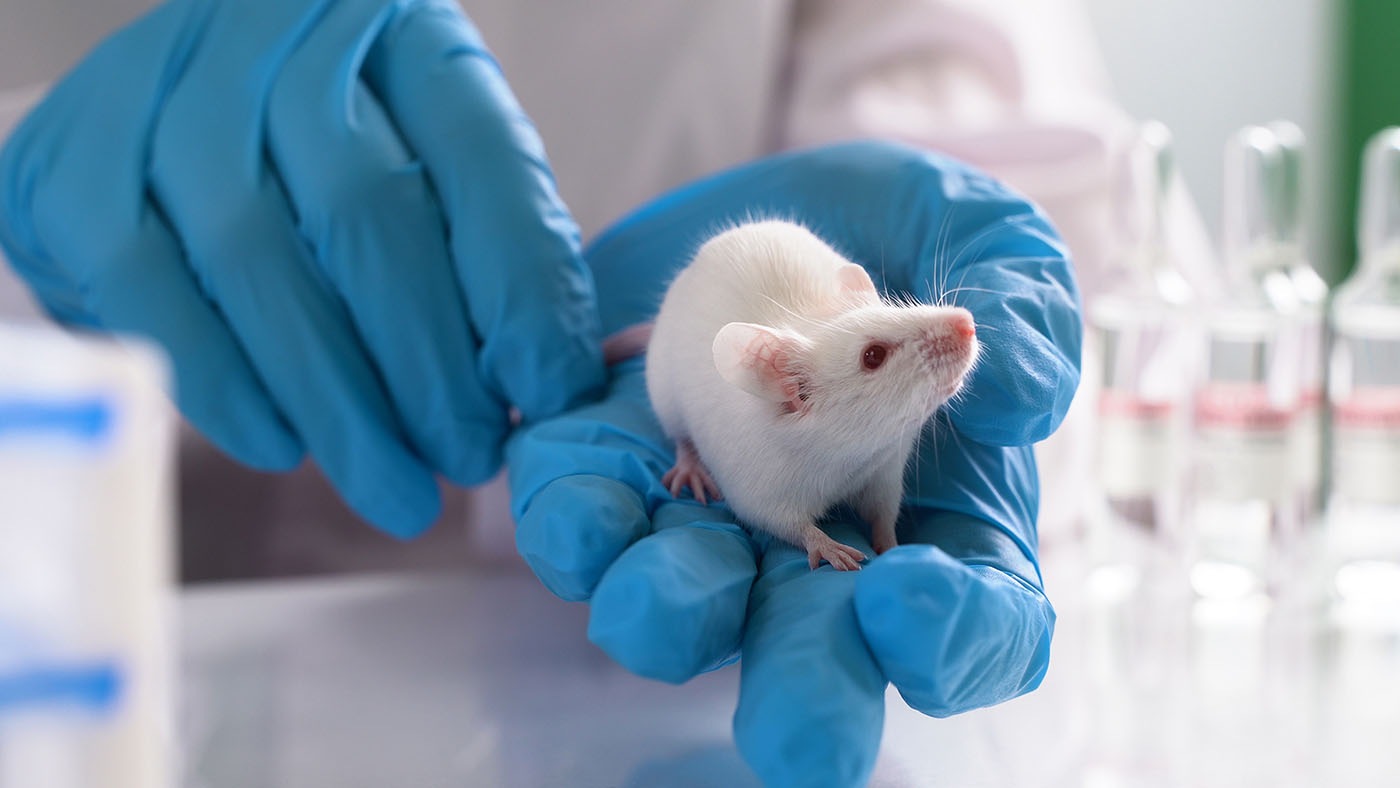
Even after a retina loses its natural light-sensing cells, some of its nerve circuitry can remain intact. In a new preclinical study, researchers showed that injectable, light-sensitive nanoparticles can lodge near surviving retinal nerve cells and help degenerated mouse retinas respond to illumination.
The work, described in the paper titled “Biomimetic graphitic carbon nitride nanoparticles for multiscale photomodulation and therapeutic intervention,” was published in Nature Biomedical Engineering. The international team was led by Menglin Chen, PhD, at Aarhus University, with collaborators from the University of Chicago, the University of Eastern Finland, Aarhus University Hospital, and the University of Copenhagen.
The study addresses a central challenge in retinal degeneration: even after light-sensitive photoreceptors are lost, other retinal neurons can persist. The researchers aimed to create a wireless interface between light and those remaining cells without relying on mutation-specific gene therapy, optogenetic modification, or surgically implanted electronics.
“When we started, our fundamental question was whether we could create a material that could act as a wireless interface between light and living cells,” said Chen, who is an associate professor at the Department of Biological and Chemical Engineering. “We can now see that the particles are able to activate nerve cells in blind retinas. That brings us closer to our long-term goal of developing a new type of retinal prosthesis.”
The retinal experiments moved the platform toward a more specific therapeutic application. After the nanoparticles were injected into mouse eyes with advanced retinitis pigmentosa, they accumulated near retinal ganglion cells, which help relay visual information from the eye to the brain. When the eyes were illuminated, the team detected light-induced activity in the visual cortex and observed behavioral responses to light. The researchers also showed that the nanoparticles could activate retinal ganglion cells in isolated porcine retinal tissue under LED photostimulation.
The findings do not show restored normal vision, but they suggest a possible route for restoring light sensitivity in retinas where photoreceptors have degenerated. “Instead of genetically modifying these cells, we use the nanoparticles to create a new connection between light and the nerve cells,” Chen said. “In this way, we are trying to make a blind retina respond to light again.”
The next steps are substantial. The team will need to refine delivery, assess how long the nanoparticles remain functional in the eye, study their long-term safety, and determine whether the light-evoked responses can be strengthened and controlled in ways that are useful for vision restoration.
For now, the work marks an early but notable step: a biomimetic material that can translate light into biological signals across scales, from individual cells to degenerated retinal tissue. Whether that microscopic “solar cell” concept can ultimately help people with vision loss will depend on the next phase of preclinical development.


